Showing posts with label France. Show all posts

Sunday, January 7, 2018

Classics Challenge 1: The Ladies' Paradise


I can't believe I've already read my first book for the Back to the Classics Challenge and that it is one that has been languishing on my TBR for a few years at least. What a satisfying feeling!

For "A Classic in Translation", I chose The Ladies' Paradise by Émile Zola, published in France in 1883 as Au Bonheur des Dames. It is the eleventh book of Zola's Rougon-Macquart series but is able to be read as a stand-alone. The book before it features one of the main characters but at a different phase in his life. As this was a purchase based on watching the television show The Paradise, I wasn't aware of the full series until later.

Basically, the main character in the story *is* the Ladies' Paradise, one of the first department stores -- based on the real Le Bon Marche but created as a rival store. Many of the pages of the story are dedicated to describing both the building and the eye-catching displays of household products and clothing. Its owner, Octave Mouret, is a widower and is the mastermind behind the undertaking. Denise Baudu is a newly-orphaned 20 year old who has two younger brothers to support. When the older one, Jean, gets an apprentice job in Paris, Denise moves the family and finds herself at her uncle's shop, across the street from the amazing Paradise. She quickly gets herself a job there and we follow Denise, Mouret, and many other characters through their interactions with each other and with the store.

This particular translation was clear and easy to read. There was just one sentence that stood out to me and made me question if Brian Nelson added anything else to the text. It was "[t]his was the embryo of the vast trade unions of the twentieth century." As the book was published 17 years before the twentieth century and Zola died only two years into the century, he would have had to have been Nostradamus to have written this sentence.

As for the story, I didn't fall in love with any of the characters, especially since quite a few of them were rather flawed, sometimes even loathsome. They, however, had no problems falling in love with each other, creating quite a messy (in a mostly good way) story. Regardless, I enjoyed the journey beside them and the explorations into Parisian culture and commerce. I truly felt disappointed that the heyday of the department store was before my time. Even just as a historical artifact, this novel preserved something special.

Returning from 19th century Paris,
K

Tuesday, October 20, 2015

New Release: Wilkie Collins


I was very excited to be offered a copy of Peter Ackroyd's new Ackroyd's Brief Lives entry, Wilkie Collins. 'Tis the season where one cannot help but choose one of Wilkie's brilliant stories to indulge in as the wintry gloom approaches. And what better way to preface a Collins read (mine was The Law and the Lady this year) than by learning more about the man himself.

Small in size (not unlike Collins himself), this book nevertheless covers Wilkie's life, including so many scandals and illnesses. It was an easy read and I appreciated the opportunity to flesh out those things I already knew about one of my favorite authors. It was obvious while reading that he is also one of Ackroyd's favorites and it produced a feeling of veracity about the facts in the book -- both from faith that Ackroyd was diligent in his research and also trust that he viewed Collins' actions in a more sympathetic light that some other biographers.

I have really enjoyed Ackroyd's non-fiction (including London Under) and fiction (featuring an RIP read from five years ago) and look forward to picking up his Brief Lives volume about Poe (and eventually getting back to the very large London: The Biography).

Solving the mystery,
K

Tuesday, October 29, 2013

RIP Reads 11 & 12: Whicher and Watcher


I finally read Kate Summerscale's The Suspicions of Mr. Whicher! I've had this on my TBR since it came out in 2008 and though I had heard of its easy readability, I just never got around to picking it up. But, as I'm behind on my non-fiction reading for the year, I grabbed this one a week or so ago.  It's the story of a young boy who is murdered, apparently in his own home and probably by a member of the household. The investigating detective from Scotland Yard is Jonathan Whicher and this is the story of the case, his investigation and the effects afterward on both the family and the detective.

While this was an interesting book which filled in a bit more of my Scotland Yard knowledge, I thought some parts were a bit info-dumpy, especially right at the beginning. Still, it was a compelling piece of history, especially reading about how the murder became so popular in England, dominating the newspapers for a long stretch of time and inspiring writers such as Wilkie Collins.


I wasn't going to buy any new books for RIP this year but then there was this new Carlos Ruiz Zafón novel (new in translation anyway) and I couldn't resist. The Watcher in the Shadows is his third YA novel from early in his career. It is an incredibly atmospheric and melancholy book with a terrifying villain. I was in doubt as to whether many of the characters would even survive to the end of the book. I think it's amazing how CRZ can take the most elemental of fears and turn them into such imaginative and unique stories. All of his YA books are well worth picking up if you're looking for suspenseful reads. I saw that Simon got a copy of the fourth in translation, Marina, just recently so I guess that will be on my RIP plate for next year!

Finding the real and the fictional equally disturbing,
K

Friday, March 9, 2012

A Year of Dickens: A Tale of Two Cities


I've done it. I finished my reread of A Tale of Two Cities, the bane of my high school existence. Twenty-some years ago, if I hadn't already read and loved David Copperfield, it might have been the end of my still short relationship with Charles Dickens. My sophomore English teacher, who I really liked despite the TOTC project, ruined this book for me by beating us over the head with themes, setting, characters, personification and all kinds of other evils. And so, even when picking up the book now, I couldn't help but notice some of the things that I was forced to evaluate many years ago. Yet, I was able to overcome and become absorbed in the plot and social commentary and I found myself actually enjoying my reread. I mean, how can anyone truly dislike a novel that contains both one of the best first lines of a book and also, arguably, the best last line as well. I also enjoyed Dickens' wit and I thought he was very fair in presenting both sides of the French Revolution. And, though not packed with wonderful characters, there were still a few gems in this one, like Mr. Jarvis Lorry, Miss Pross and Jerry Cruncher.

I don't know if I will ever read this story again but at least I no longer associate it with intense misery. Success!

In a far, far better place,
K

Monday, October 10, 2011

The Lantern Group Read: Parts 1 & 2

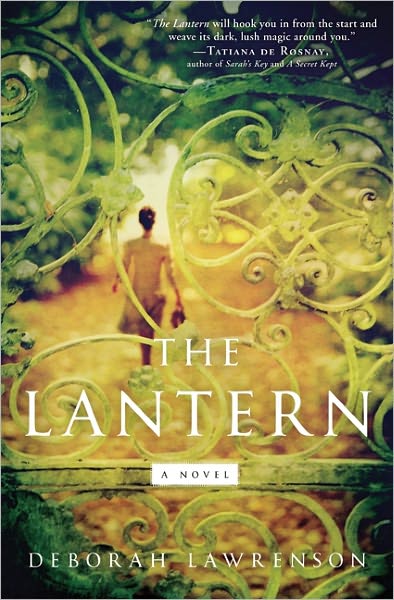
The first week of the group read of The Lantern by Deborah Lawrenson has just ended. This book is conveniently broken up into parts and so we read Part 1 and Part 2 this week (only 130 quick-reading pages if you still want to catch up and join in). Carl of Stainless Steel Droppings is the host for the week and these are his questions --

(NOTE: The first few answers are spoiler-free. I'll let you know when potential spoilers creep in later.)

1. This may seem like an obvious opening question, but what do you think of The Lantern thus far?

I think this is a great opening question because I wasn't immediately drawn into the book. As mentioned in the next question, the story alternates back and forth between two women in the same place but in different eras and it took some time to understand either story line and become invested in them. Once I got used to the switching narratives though and figured out the time frames, I started enjoying the story much more. I'm still not sure exactly where it's going but I'm more interested in finding out than I was in the first 40 pages.

2. The book appears to be following the experiences of two different women, alternating back and forth between their stories. Are you more fond of our main protagonist's story or of Benedicte's or are you enjoying them both equally?

Right now I'm enjoying both equally. They are very different stories--one of an old woman remembering her childhood and the other of a young woman at the beginning of an adult relationship--and so, though I see no real intersection yet between the stories, I am interested in where they are going.

3. The Lantern is a book filled with descriptions of scents. How are you liking (or disliking) that aspect of the book? How do you feel about the lavish description of scents? How are the short chapters working for you?

I'll answer the second part first and say that I'm really liking the short chapters for some reason. It's almost like a soap opera where you experience a scene and then move on to a different story. Not that I like soap operas at all, but it's working in this book for me. And it makes the book just fly by, doesn't it?

The scents, on the other hand, are confusing me. I knew they would be a big part of the story when the prologue began with a heavily descriptive bit about scents but, because they are a much harder thing to conjure up in the mind (as opposed to images), I wasn't sure if it would work so well. At one point, I was able to imagine a warm breeze over a field of lavender because I have an established brain pathway for the scent of lavender. But then, elsewhere in the novel, another scent or combination of odors will be mentioned and I have no reference for it in my mind and that section will just fall completely flat for me. It reminds me of when someone begins talking about the composition of a wine (I'm not really a wine drinker because the fermented grapes just taste like death and decomposition to me), the notes of this and hints of that, and I have no idea what they are talking about. Sometimes I don't believe that they are really getting all of that out of a sip and sometimes I just don't care. And that's how I feel about some of the scent descriptions in the book. I have no frame of reference and so I am either skeptical that someone was paying that much attention to individual scents or I just don't care because it's not conjuring anything up for me. And yet, some of them still somehow grab me and draw me a bit more into the atmosphere of the story. So, yeah ... I'm torn.

4. How would you describe the atmosphere of Parts 1 and 2 of The Lantern?

(This answer is really SPOILERY. Move along to the next question if you don't want to know plot details!)

I think the atmosphere of Benedicte's story is truly menacing because her brother Pierre is actually evil and bad. I don't know if I'm so afraid of his ghost but I'm terrified of the real boy. I'm worried about what actually ends up happening to Benedicte and those around her.

The unnamed protagonist's storyline, however, is much more ambiguous. I would describe it as invoking a sense of nervousness and doubt. I believe Benedicte's reminiscences are true (and even kind of believe that she is seeing real ghosts) but I am not sure if I believe in this woman's feelings or not. Part of me thinks Dom could be shady but part thinks that she is just overreacting to things. Even with her "he's done a bad thing" speech at the beginning, I still don't trust her entirely.

5. Has anything surprised you to this point? Anything stand out?

I'm not sure that anything has surprised me or really stood out yet. There's certainly a sense of building tension in both stories but it's pretty evenly paced. I'm hoping that the next two parts will have some shockers in them.

6. What are your feelings about Dom in these first two sections of the story?

(Very SPOILERY again. Move along.)

I still kind of like Dom and I feel sorry that his girlfriend is constantly badgering him to give up info about his ex-wife that he obviously doesn't want to talk about! I think it's because I've always liked Max de Winter despite everything and I'm kind of banking on Rachel being a bit of a Rebecca. I mean, Dom did save the girlfriend from the collapsing roof, right? Yes, he might have actually caused the cave-in and just saved her at the last minute for some reason but there's no proof of that! And hey, he's a musician so there's ample reason for him to be moody and brooding. Not to mention the fact that his girlfriend is a mooch. ;) Just kidding!

Bonus question: Did anyone else hear "Last night I dreamt I went to Manderley again" ringing in their ears through the first sections of the book?

(Sorta SPOILERY.)

This is a tough one for me because, being a big fan of Rebecca, I notice when things are similar to that classic story (like the protagonist with no name) but I also notice when things are pointedly different. Then it feels a little heavy-handed, like Lawrenson is writing "see, my narrator has a new house with her man and new sheets and new trinkets and she doesn't have to step into another woman's house like the girl who went to Manderley did!" But then we find out that maybe not all of those trinkets are new and maybe the stories are more alike after all and ...

On to parts three and four,
K

Tuesday, October 4, 2011

RIP Read 3: The Penguin Book of Gaslight Crime

Besides having the most amusing cover of almost any book I've ever owned, The Penguin Book of Gaslight Crime is a fantastic little collection of late Victorian crime stories. The editor, Michael Sims, deserves credit for a wonderful collection that doesn't include a single dud. Every story in this book was enjoyable and a few were unforgettable.

Though we are all fairly familiar with a famous Victorian detective or two, Sims decided, after working on a collection of stories about the famed gentleman thief Arséne Lupin, that the era's thieves weren't getting the attention they deserved. After reading this collection, I heartily agree.

I hadn't read any of the authors in this volume except for O. Henry and his classic Christmas heartstring-puller "The Gift of the Magi" -- which couldn't be more different from his tale of frontier town trickery, "The Chair of Philanthromathematics". I also read Sinclair Lewis for the first time in this book with his RIP-worthy "The Willow Walk". Though this group of stories turned out to be more witty than terrifying, I'm still going to include it in the challenge because there's many a mystery in the volume -- even if we are viewing them from a more prosecutable angle!
"The difference between you and me is this," Cecil was saying. "You exhaust yourself by making money among men who are all bent on making money, in a place specially set apart for the purpose. I amuse myself by making money among men who, having made or inherited money, are bent on spending it, in places specially set apart for the purpose. I take people off their guard. They don't precisely see me coming. I don't rent an office and put up a sign which is equivalent to announcing that the rest of the world had better look out for itself. Our codes are the same, but is not my way more original and more diverting?" -- Arnold Bennett, "A Comedy on the Gold Coast"
Keeping my hand over my purse,
K

Thursday, July 14, 2011

"We came on the wind of the carnival."

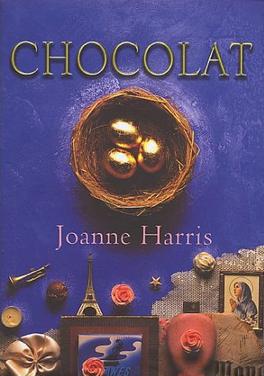
Joanne Harris' Chocolat has been on my TBR for quite a while and, as I'm behind on my reading from my shelves tally for the year (only at 20 of a desired 50 right now), I needed to get through some of the shorter books to try and catch up. Not only is this a short book but it was also a quick read, with some simple but powerful ideas and an interesting cast of characters.

Vianne Rocher is a wanderer, born of a wanderer. She decides to make a stay in Lansquenet, a French village, where she might not be entirely welcome. Her specialty is chocolate but her timing couldn't be worse as it's the start of Lent. The local priest sees her as a temptress who must be forced out of town but some of the villagers find that she supplies exactly what they've been missing in their lives.

Overall, I really enjoyed this novel -- up until the last few pages.

SPOILERISH MOMENT (skip if you plan on reading the book)

If you have read the novel, you know that something happens that Vianne acts like is no big deal but which will obviously cause problems once the truth gets out. She seems so intelligent and sensitive up until that point and then all of a sudden she is just incredibly self-centered. It almost ruined her entire character for me. Luckily, though, after some time now, it is the larger picture of the story that stands out and not the ending.

AND DONE

But until the end, I really loved the characters -- from children to old women, gypsies to retirees. Even the narrow-minded and boorish characters were well written. And the discussion of chocolates and flowers made me want to pick up and move to France as soon as possible. Instead, I will have to borrow the film and settle on an evening with Johnny Depp instead.

Dreaming of confections,
K


Support our site and buy Chocolat on Amazon or find it at your local library. We bought our own copy.

Wednesday, January 5, 2011

"It was a hot, peaceful, optimistic sort of day in September."

I had heard nothing but good things about Elaine Dundy's The Dud Avocado so, even though I still had no idea what the title meant, I decided to make it one of my last reads of 2010.  Now I know what the title means but I'm not so sure about the novel itself.

This is the story of a young woman in the 1950s who has escaped her dull American life with a two-year fully-financed jaunt in Paris, courtesy of a rich uncle.  She does a little bit of acting but mostly a lot of nothing.  I hate to say it but everything from the lead character's name (Sally Jay Gorce) to her impulsive escape to the French Riviera bothered me.  Although I had heard repeatedly how funny this novel was, I can't remember laughing or even smiling a single time.  Sally Jay was not a malicious or stupid character and I didn't actually dislike her but I didn't really care what happened to her either.  When she got into hairy situations, I felt she never got more than she deserved.

If you've read this book, can you tell me if I missed something?  Did I read it at the wrong time?  Or was it just not for me?  I know I have a sense of humor but maybe not when it comes to lazy youths who feel entitled to have fun on someone else's dime.

Pondering the dud novel,
K


Support our site and buy The Dud Avocado (New York Review Books Classics) on Amazon or find it at your local library.  We bought our own copy of this novel.

Monday, October 18, 2010

"It's snowing over Edinburgh on this 16th day of April, 1874."

One of my read-a-thon books was The Boy With the Cuckoo-Clock Heart by Mathias Malzieu -- a petite book with a small tale inside.  Celia passed this book on to me after not quite connecting with it.  She went into it with certain expectations and was let down when she got something different.  Knowing this helped me to go in with a clean slate and I found the book charming if a bit forced in parts.

Simply, Jack is the abandoned son of a Scottish prostitute who almost dies at birth from a frozen heart.  The woman who delivers him ingeniously keeps his heart moving with the help of the mechanism from a cuckoo-clock.  As Jack grows, he must learn to accept the limitations of his heart or risk destroying its delicate balance.  Of course, true love enters his life early with the Flamenco-dancing Acacia and he puts his life on the line for her love.

Malzieu is a French musician -- lead singer of the band Dionysos.  I hadn't heard his music when I started the book but part way through, when I felt comfortable with his written voice, I went to find out what his real voice was like.  It was exactly as I had imagined, deep and bassy with a sense of sarcasm underneath.  There is a companion album to this book (in a mix of French and English) by the band that sounds like a mix between a Tim Burton soundtrack and Portishead with a French pop twist.  In fact, there is an animated film of this tale in the works which is slated to be released next year.

Parts of this story are crude and others are touchingly sweet.  It won't appeal to everyone but it's certainly a unique little book that I'm sure will become a cult favorite.  Here is a sampling of songs from the album (very strong language warning!).


Going the distance for love,
K


Support our site and buy The Boy with the Cuckoo-Clock Heart on Amazon or find it at your local library.  We received our copy from the lovely Celia.  I'm not sure how she got it.

Monday, April 26, 2010

New Release: Wild Romance

Sometimes when I read about a strong woman in an oppressive society, I wonder how much of the "history" is really just wishful thinking on the author's part.  And yet it was easy to believe the story of Theresa Longworth because of the straightforward way that Chloe Schama has presented the facts in Wild Romance: A Victorian Story of a Marriage, a Trial, and a Self Made Woman.  Alas, this presentation of straight facts is also the main weakness of the book.

Theresa Longworth was a nineteen year old girl who fell in love during a steamer trip with the man who rescued her errant shawl.  The man, William Charles Yelverton, was a soldier, always on the move.  Fortunately, Theresa also felt the pull of exploration and she traveled as a nurse and with various friends and family members -- sometimes meeting up with Yelverton in foreign locations.  Through the following years, Yelverton and Theresa exchanged many letters that showed Theresa's independence and free spirit and Yelverton's ambivalence about this woman that he rarely saw.  When they ended up together in Scotland and Theresa orchestrated a secret wedding (based on Yelverton's purported family issues), Theresa thought she had finally achieved what women of her era were taught to want.  But when they spent time apart after the wedding, she came back to find that Yelverton had romanced and married a widow.  Theresa was forced to fight a court case for her rights -- a case in which her character was laid open through the aforementioned letters.  The years the various trials dragged through changed her life forever and she eventually became a solitary wanderer around the world.  She also became a proponent of women's rights as they related to marriage and the law.

This was a fascinating collection of details about Theresa and her fight to be an individual of value in Victorian society. The author came across Theresa's story in a footnote while she was researching sensational novels.  In fact, one of the best parts of this book is the way that Schama related the history to the novels being produced at the time.  Though the mentions were brief, they provided a connection between this story and the ones I already am familiar with -- those of Dickens, Collins and more.  And Theresa's plight--that of being judged by a system that did not value independence or sensuality in women--made for a very thought-provoking read.  As I mentioned earlier, the only real weakness I found in the book was that it was mainly a presentation of facts with very little analysis.  We were presented with portions of letters and events and then left to determine on our own whether it was Theresa or Yelverton that was being truthful.  I would have liked an opinion from the author since she was the one who read all of the documents.  Despite this shortcoming, I enjoyed the book even though I didn't entirely like Theresa.

Appreciating the pioneers -- even the flawed ones,
K


Support our site and buy Wild Romance: A Victorian Story of a Marriage, a Trial, and a Self-Made Woman on Amazon or find it at your local library. We received our copy through the LibraryThing Early Reviewer program.

Thursday, April 22, 2010

"The young policewoman stood in the corner of the room."

Pardonable Lies is the third of Jacqueline Winspear's Maisie Dobbs novels and it is somewhat similar to the first two but also a departure from them.  As is usual when I review one of a series, I will attempt to be as general as possible in the summary but please skip it if you want to be sure nothing is given away.

Maisie, Psychologist and Investigator, is having continued success in her business and seems to have everything together.  But when she must return to France as part of her investigations, she suffers from a post-traumatic stress event when the memories of her time as a nurse in the Great War come back to her.  Her current cases cause her to re-evaluate friendships, loves and losses and it is a mystery if she will come out of this episode in her life unscathed.

I appreciated the cracks in Maisie's varnished finish that came through in this story.  It seemed a bit callous and unlikely that she would be able to completely put her time as a trauma nurse behind her.  I felt this novel made Maisie a bit more human than she was in the last one.  Conversely, I did not think it was necessary for Winspear to give Dobbs psychic abilities.  It was a silly plot element and there wasn't really a point to it.  I hope that this isn't included going forward in the series.

I'm very curious about the fourth book in the series, Messenger of Truth, because it's quite short.  Maybe I will pick it up in the next month or so.  After that, I will need to get copies of the remaining three books that have been published.  This is definitely a series I want to continue with!

Admiring the well-organized but vulnerable mind,
K


Support our site and buy Pardonable Lies on Amazon or find it at your local library. We bought our own copy.

Sunday, December 6, 2009

"In an easy-chair of the spacious and handsome library of his town-house, sat William, Earl of Mount Severn."

I had heard of Ellen Wood (a.k.a. Mrs. Henry Wood) and her novel East Lynne but it took the prompting of Simon of Savidge Reads and his Sensational Sundays to get me to commit to reading it this fall. Oh, how perfect this book was! I have been in a bit of a reading funk lately -- reading too many books that I didn't love and in some cases barely even liked. But then East Lynne came into my life and reminded me that I love sensational Victorian novels!

East Lynne is the name of the estate just outside the town of West Lynne -- some miles from London. It is one of a few properties owned by Lord Mount Severn and one he must part with as he has run through all of his funds and needs the ready cash. He makes the sale in complete secrecy, even keeping his teenage daughter in the dark as to his financial woes. He sells the home to a respectable attorney, Archibald Carlyle, from West Lynne. Lord Mount Severn and his daughter, Lady Isabel Vane, return for a visit and Carlyle, in his generosity, allows them to stay at East Lynne to continue the protective secrecy of their agreement. Unfortunately, while they are there, Lord Mount Severn's gout gets the best of him and he dies, leaving his beautiful and gentle daughter with not a cent to her name. Carlyle is thoughtful enough to send her off with one hundred pounds to live with her uncle, the new Lord Mount Severn, and his dreadful wife. From this point on, Lady Isabel is ruled by inexperience and makes many decisions -- some that are fortunately in her best interests and others that are woefully bad.

Simon frequently called East Lynne "the mother of all sensation novels" and I will only dispute that to suggest that it is perhaps tied in that distinction by Wilkie Collins' Armadale. Any story with villains so despicable that it turns your stomach in knots and tragedies so painful that they bring tears to your eyes is a satisfying sensational read. This book is already on my "must read again" list and I hope that any of you who love Victorian novels will pick this one up.

Rediscovering the joy in reading,
K


Support our site and buy East Lynne on Amazon or find it at your local library. We bought our own copy.

Thursday, October 15, 2009

New Release: The Age of Wonder

Though I've been busy with my seasonal reads, I took the time out to read a non-fiction title that proved almost as exciting as any of the sensational stories. Hiding behind the impressive title of The Age of Wonder: How the Romantic Generation Discovered the Beauty and Terror of Science, Richard Holmes has written a highly accessible book about the progress of science in England during the Georgian and Regency times.

This book is more than a simple timeline of historical events related to science and natural philosophy. It is a string of biographies and also a period history including the politics, poetry and religion of the times. Holmes is a fantastic writer with a sense of humor and an easy way of presenting what could be a daunting subject. Whether discussing William Herschel and his expansion of our knowledge of the cosmos, Joseph Banks and his exploration and leadership skills or Humphry Davy and his chemistry and engineering genius, each man comes alive and his contribution to science during the Romantic Era is clear. And if you have no interest in these pioneers then perhaps you will enjoy reading about Mary Shelley and the effect of her well-known novel on the public view of science or about the poets Keats, Shelley and Coleridge and their support of and inclusion of science in their poetry and prose. I enjoyed seeing how the groundwork was laid for such geniuses as Darwin and Faraday -- the establishment of a climate in England that allowed these men (and a few women) to revolutionize our theories and our world during Victorian times.

I strongly recommend this book to anyone with an interest in history, science or Georgian and Regency England.

Appreciating when fact proves as compelling as fiction,
K


Support our site and buy The Age of Wonder: How the Romantic Generation Discovered the Beauty and Terror of Science on Amazon or find it at your local library. We asked the publisher for our copy.

Thursday, October 8, 2009

"Though carefully educated in medicine and surgery, I have never practiced either."

Though I thought that this book would be a single story, I found out in the Introduction that In a Glass Darkly is actually a collection of short (and one longish) stories written by Sheridan Le Fanu. The subjects of the stories are hardly related except that they all are improbable. Some are rooted in the supernatural, others in the evil of men's hearts.

The first three stories, Green Tea, The Familiar and Mr. Justice Harbottle, were the most similar. Each dealt with someone plagued with madness though the sources of the madness were debatable. In one case, guilt was suspected though it could have been a ghost. In another story, the culprit may have been too much green tea. These were good solid Victorian stories of the supernatural though none of them were mind-blowing.

The fourth story in the book was the longest and was an adventure story with human villains. The Room in the Dragon Volant was maddening in the way of Victorian stories where the reader is far more sophisticated than the trusting, naive protagonist. From the start of the story, it was obvious what mistakes young Richard made when traveling to France. However, he is also our narrator and so we could assume that everything worked out for him somewhat in the end -- though one starts to worry when the premature burial scene comes around! Yet, by the end of this story, it was my favorite of the book.

The final story, Carmilla was shorter than the previous one but also pretty long for a short story. This was again another kind of story, one that I wasn't expecting after the other four -- a lesbian vampire story. I liked this story until it got toward the end when the situation was pretty obvious but again our oblivious young narrator and protagonist can't put together the clues that are spoken right at her. For some reason, it was a bit more maddening than in the previous story. However, I found it interesting that Carmilla was written in 1872-- twenty-five years before Dracula --and was a major influence on the classic vampire story.

This was one of the books that I really wanted to read this fall. I had already planned to read it for another challenge but held off until now and this definitely proved to be a perfect time of year (and a perfect day) for it. Sitting on the sofa with thunder and pouring rain while I got through Carmilla made the story that much spookier. This was one of the best R.I.P Challenge IV reads that I've had so far. The stories weren't perfect but they were very enjoyable. I will definitely read more Le Fanu in the future.

This book is also on the 1001 Books to Read Before You Die list. I can definitely see the influence of some of these stories on future fiction -- especially horror and vampire stories. I could even see The Room in the Dragon Volant being made into a film one day. I am making terrific progress with the 1% Well-Read Challenge as this is my eighth book for the challenge this year. I only have two more to read before the end of the year and then I will be more well-read ... at least by the standards of the current list!

You know I made it to the end of the book because I'm writing this post ...
K


Support our site and buy In A Glass Darkly on Amazon or find it at your local library. We bought our own copy.

Sunday, April 5, 2009

Book v. Movie: Madame Bovary

In the 1949 film version of Madame Bovary, the author, Gustave Flaubert, is on trial for creating an unsavory, un-ladylike and detestable character in Emma Bovary. This is of course based on the actual lawsuit brought against Flaubert and his publisher on charges of immorality. They were acquitted and the book was a success.

This was a book that I avoided reading for a very long time based on a lack of knowledge of the plot. When I finally picked it up a couple of years ago, I was surprised by how engaging and heartbreaking this story was. Emma Rouault is a young woman who dreams of romance and chivalry while living the life of a farmer's daughter. When she has the opportunity to leave her life for one she believes to be more compelling, that of a doctor's wife, she finds reality to be far from what she desires. In an attempt to remedy this, she recklessly overspends to have a home above her station and has extramarital affairs in a search for those things she craves. She neglects her child and embarasses M. Bovary, her husband.

The film is a very accurate telling of the story and almost perfectly captures the pathos of Madame Bovary's situation. Jennifer Jones is Emma and Van Heflin is her tragic husband. My only complaint is the standard one I have with films of this time period -- the use of British actors in a French film who don't even attempt an accent. Some side characters are slightly French but not many!

Verdict: Read the novel and then watch the movie. You won't be disappointed with either.

Understanding a bit of Emma's angst,
K


Buy Madame Bovary (the novel) and Madame Bovary (the film) on Amazon or find them at at your local library.