I haven't written an actual book post in a while so I thought I would do a quick catch-up before March Magics starts tomorrow! Here are some of my January and February highlights:
Becoming by Michelle Obama: I listened to this in audiobook because I wanted to hear her own narration and it was such a great choice. I loved that the book focused on more than just her husband and his political job. This was really about her personally and it was enlightening and inspiring.
Murder by the Book by Claire Harman: If you want a nice brief non-fiction set in Victorian London, with a gruesome murder, an appearance or two by Charles Dickens, and a discussion of the trashy "popular" literature of the time, grab this one! I really liked it and it made me want to reread Oliver Twist (though it wasn't the book that possibly inspired a murder).
Shades of Milk and Honey by Mary Robinette Kowal: This has been on my reading list for years but somehow I never really knew what it was about. (It's got magic in a real world setting. My favorite!) If I had, I would have read it AGES ago and would have excitedly anticipated each new release in the series. At least I now have four more books to read as slowly or quickly as I want! I also listened to this one and the author herself read it (she's also a voice actor among other things) and it was so wonderful because they were HER characters and you could hear the voices that she had probably created for them as she wrote.
Home Sweet Homicide by Craig Rice: Of the four American Mystery Classics I've read so far (six were released last year and six more will be out in a couple of weeks), this was my favorite. It's got the cheekiest set of kids who decide to solve a mystery and give the credit to their single mom in order to get her publicity since she's a mystery author. It was ridiculously unbelievable as a story but the fun overrode all of that.
Bluecrowne by Kate Milford: I keep telling you all to read Kate Milford's books because they are the BEST and, well, if you haven't yet, I don't know what else I can do. So, I'll just tell you once again that these are all-ages books masquerading as middle grade. They are intense and so incredibly well-crafted and you can read them in any order because they all skip around but link together. This is the latest one and she already has a new one coming out in November, I think, and I cannot get enough. Everyone should be reading her books!
The City in the Middle of the Night by Charlie Jane Anders: This book was a crazy ride through an unrecognizable world. I kept being totally shocked by the things that happened but nothing ever felt out of place. Strangely, my favorite thing was the use of words whose meanings had changed after hundreds of years. Something would be mentioned like "lemonade" and then the person would be served a glass of green liquid with weeds in it that tasted slightly sour. I thought about language for days after finishing this book! I didn't think about tidally-locked planets because those are apparently horrifying and I am glad I will never have to migrate to one.
Honorable mentions should go to Quiet Girl in a Noisy World by Debbie Tung (a collection of comics/panels that felt oh so real to this introvert), The Ravenmaster: My Life With the Ravens at the Tower of London by Christopher Skaife (a very personal and fascinating memoir), Once Upon a River by Diane Setterfield (a dark and beautiful story that has restored her to my "must buy" list), The Apparitionists by Peter Manseau (a super fascinating history if you are into spiritualism, photography, or the history of technology), Forest of Memory by Mary Robinette Kowal (a crazy good novella), and The Binding by Bridget Collins (a great setup with a slightly predictable plot that still caused all the feels).
I still have more to share with you but need to write some actual posts so those will pop up though the month of March between the ones about my favorite DWJ and Pratchett books!
Reading and reading and reading,
K
Showing posts with label non-fiction. Show all posts
Thursday, February 28, 2019
Wednesday, August 29, 2018
Me and HDT
At the beginning of the summer, I made some reading plans that included spending quality time with Henry David Thoreau. Well, it took me almost all of August but I finished! 500 pages of biography and 300 pages of rambles and rambling later and I am safely on the other side. My verdict: I'm on the fence about Thoreau the writer but Thoreau the man was well worth meeting.
I started with Henry David Thoreau: A Life by Laura Dassow Walls and read through his childhood and young adult years, up until his sojourn into the wilderness ... one mile away from his parents' house.
It is not all books that are as dull as their readers. There are probably words addressed to our condition exactly, which, if we could really hear and understand, would be more salutary than the morning or the spring to our lives, and possibly put a new aspect on the face of things for us. How many a man has dated a new era in his life from the reading of a book.After Thoreau's two year, two month, and two day experiment ended, I headed back to the biography and that's when I really started enjoying myself. Thoreau's views on slavery, war, Native Americans, and evolution were all progressive and his actions were sometimes just as brave. When he escorted escaped slaves to trains bound for Canada or when he was the first to speak out nationally in support of John Brown after the Harper's Ferry uprising, he showed his true character. And when his first thoughts after reading Darwin's Origin of the Species were that all men truly were created equal and that the ranking of the races had no actual basis in nature (as was claimed by pro-slavery jerks), I couldn't help but become one of Thoreau's biggest fans. His thoughts on conservation and natural spaces and even hunting were just the icing on the cake. I'll admit to shedding quite a few tears when he died at the age of 44 from tuberculosis. He could have done so much more with the other half a lifetime that he was denied.
I am very happy that I decided to take on this project this summer and I will read more of Thoreau's writings, especially Civil Disobedience, in the future. And I can cross another book off my high school dislike list too! Dare I try a reread of The Grapes of Wrath next?! Haha.
With inspiration,
K
Tuesday, June 12, 2018
The Radium Girls
I've been doing a good job at reading more non-fiction this year and of focusing most of it on voices that need to be amplified or remembered. The Radium Girls: The Dark Story of America's Shining Women by Kate Moore definitely helps me toward my goal. This is a story of women who were taken advantage of and then dismissed. It is wonderful that now their names and stories are in the spotlight.
When radioactive elements were first discovered, not even the scientists working with them knew of their dangers. And, of course, businesses jumped on board and started taking advantage of these new, amazing elements before those dangers could be discovered. Radium was used in many applications, one of which was painting clock faces and airplane dials so that they would glow in the dark. This seems like a worthy use of radium, especially as the world was at war. However, this paint was applied by teens and young women ... with minuscule paint brushes ... that they could only get a fine enough point on by "pointing" them in their mouths.
This book is not an easy read. Based on our modern knowledge of radioactivity, we can already guess at the physical horrors that were in the futures of these women and they are talked about in gory detail. But the true horrors turned out to emanate from the businesses that betrayed them, denied them money and health care, and straight up lied to them even when the truth started to be revealed. In an age where certain people in high places think that industry is over-regulated, this story stands out as a stark reminder of why those regulations were created in the first place. So, though it is hard to stomach, I think this story is essential reading.
Remembering,
K
Tuesday, May 8, 2018
New-ish Release: Dear Fahrenheit 451
It says something about the quality of writing in Dear Fahrenheit 451: Love and Heartbreak in the Stacks (A Librarian's Love Letters and Breakup Notes to the Books in Her Life) that I could enjoy it even though I had only read a handful of the books that Annie Spence mentioned. Each of the letters that she wrote is funny and insightful and a fun look into the mind of a librarian and lifelong reader. There are books that she always has and always will love. There are books that didn't age well for her. There are books that she wouldn't touch with a ten-foot pole (literally). And there are books that she loves to recommend -- sometimes successfully!
Honestly, as I read this, I started ignoring many of the actual titles (usually because they were books I had ZERO interest in -- Spence and I do not overlap much in our bookish tastes) and just focusing on the feelings. I did add one book to my library list--The Fledgling by Jane Langton--and I look forward to exploring its ability to inspire a young Spence so much with its presentation of transcendentalism and Thoreau that she eventually named her son Walden. Because, though we all read and love different books, each loving reader experiences the same highs and lows. One day I may even write a few letters to books of my own that have affected me.
Which book would you write a love letter to?
Epistolarily,
K
Wednesday, February 28, 2018
The Fire This Time
Before the end of the month, I wanted to mention the final book I read for Black History Month, The Fire This Time: A New Generation Speaks about Race, edited by Jesmyn Ward. I know that this is a current sort of book, talking about the Black experience and psyche in today's America but I do feel that reading about what happened yesterday is just as important as studying what happened in 1965. This collection of essays and poems range from topics such as slavery and police profiling, to family and music. Together, they begin to paint a picture of the required mindset and physical realities of being Black in America today.
There were so many beautiful and sorrowful pieces in this book. There were small glimmers of hope for a better future, especially for today's children, but these were all also tempered with a dose of reality. I personally found it to be a call to action -- both to be a better and truer ally to communities of color and to work harder to change the system through civil and political action so that everyone can truly know that they "have a right to be here" (Edwidge Danticat).
With a heavy heart,
K
Monday, February 26, 2018
New Release: We Matter: Athletes and Activism
Out in just a week or so, We Matter: Athletes and Activism by Etan Thomas is a collection of thoughts and interviews on athlete activism and also the issues that they have to be vocal about. Thomas, a former NBA player, speaks of his own education and mentoring and how it led to his ability to speak out when things in life were unfair or unjust. He covers everything from the Black Lives Matter movement to education to the unique barriers facing Black girls and women.
This isn't normally the kind of book I pick up because of the strong emotions involved but, as a big fan of the NBA (I'm actually watching a Lakers game right this moment) and with the recent crappy talking-head comments about how LeBron James should just "shut up and dribble", it seemed like this was meant to be in my hands right now. And I really ... well, enjoyed is not the word is it when you're talking about systematic racism and police brutality and other such topics ... appreciated the chance to learn and think and explore with Etan Thomas. The variety of people he chose to interview was helpful to presenting a well-rounded discussion and I enjoyed hearing from individuals that I "know". Still, there is not really any barrier to this book also being accessible to readers who are not sports fans.
The first few interviews were very tough to read, those with the siblings or children of Trayvon Martin, Eric Garner, Terence Crutcher, and Philando Castile. These are all unarguably some of the most heinous, pointless murders of innocent people in recent history. To think of the losses from the points-of-view of the family is heartbreaking. It was also the perfect way to start the conversation about the ability of athletes to speak out about these sadly unpunished crimes in their hometowns or cities of play, whether by wearing hoodies or "I Can't Breathe" tee shirts or by participating in marches and panel discussions. I appreciated how Thomas spoke to athletes and coaches/CEOs from the NBA, WNBA, and NFL because each league has different audiences and different levels of receptiveness.
One thing that really resonated and stayed with me was when Thomas would talk about raising his own children and the children he coaches in basketball. I had to re-acknowledge over and over how privileged I have been to be able to keep my white son sheltered for so much longer in life than Thomas was allowed to do with his Black children. My heart broke at the young ages at which he already had to be talking to them about interacting with the police and other authority figures. This is something I can't ever afford to put to the back of my mind.
Finally, I really came to understand how "Black History" is not just about Washington Carver and Rosa Parks and Martin Luther King, Jr. It is about everything that happened up until yesterday. It is the entire span of time and actions that determine the life (and, sadly, death) of each Black person today. It is being aware of the contributions, challenges, and needs of a community that still must fight to be integrated into the country that they helped build. We each need to take a part in keeping these issues in current discussions and we should thank the athletes who sometimes risk their entire careers to do just that.
In solidarity,
K
Tuesday, February 20, 2018
The Fire Next Time
For the first time this year, I decided to purposefully read for Black History Month. I recently watched the I Am Not Your Negro documentary on PBS and loved the words and thoughts of James Baldwin so The Fire Next Time was an obvious next step. And though this small collection is just over 100 pages long, it took me a while to get through because I reread almost every passage.
Now, I could sit here and copy out a host of meaningful quotes or you all could just go and pick this one up. I think each reader will get something different out of it. You may connect with some of the same parts that I did, ones that speak as much to the institutionalized racism of today as they did to that in the early 1960s. You may nod your head as Baldwin speaks about the failings of religions in America. Your heart may also ache as you think about the past 50 years when we could have made so much more progress.
Today, I'll pick up Jesmyn Ward's The Fire This Time: A New Generation Speaks About Race from the library and keep learning.
Lost in thought,
K
Thursday, February 1, 2018
The Natural World, Past and Present
Last weekend I participated in about half of the 24 in 48 Readathon. (The second day I just couldn't get interested in reading for some reason so I only got 11 hours done.) The first two books I read were ones sitting on my non-fiction TBR that I wanted to be able to mark as read.
Then I read Jane Goodall's 50 Years at Gombe, which has been on my shelves for a few years now (the 50 years was in 2010). If you are a Goodall fan, most of the information and history in the book will be a review but it's a nice collection of some of the National Geographic photographs that brought Jane to the world's attention and some more recent photos of the land and the current chimps. (I happen to own the original August 1963 Nat Geo that first featured the chimpanzees.) This book is great for a basic overview and a call to action. It lists many of the organizations that are supported by the Jane Goodall Institute and the ways for people all around the world to make a difference in the lives of the chimpanzees and the humans around them. I was extremely happy to hear that my best friend donated to the Institute this year instead of sending me Christmas presents. (I donated to the Reteti Elephant Sanctuary instead of shopping for her.)
The first is one I just got this past Christmas -- Amazing Rare Things: The Art of Natural History in the Age of Discovery by David Attenborough, Susan Owens, Martin Clayton, and Rea Alexandratos. It focuses on five natural history artists--Leonardo da Vinci, Cassiano dal Pozzo, Alexander Marshal, Maria Sybilla Merian, and Mark Catesby--and their works that are now held in the Royal Collection. They each represent a period in time, from about 1470-1730.
I am intrigued by natural history artists and actually have five prints hanging over my tv (that are rotated in from a collection I have -- right now they are a squid, a crab, a pineapple, an octopus, and molluscs). It was interesting to read about the diverse backgrounds of each of these artists and about what inspired them to draw. This isn't a super comprehensive natural history art book but more a snapshot of the works of a few prolific pioneers.
Then I read Jane Goodall's 50 Years at Gombe, which has been on my shelves for a few years now (the 50 years was in 2010). If you are a Goodall fan, most of the information and history in the book will be a review but it's a nice collection of some of the National Geographic photographs that brought Jane to the world's attention and some more recent photos of the land and the current chimps. (I happen to own the original August 1963 Nat Geo that first featured the chimpanzees.) This book is great for a basic overview and a call to action. It lists many of the organizations that are supported by the Jane Goodall Institute and the ways for people all around the world to make a difference in the lives of the chimpanzees and the humans around them. I was extremely happy to hear that my best friend donated to the Institute this year instead of sending me Christmas presents. (I donated to the Reteti Elephant Sanctuary instead of shopping for her.)
Have you read any great nature/natural history books lately?
Returning to the roots,
K
Labels:
Africa,
America,
animals,
art,
Italy,
natural history,
non-fiction
Friday, January 26, 2018
The Wicked Boy
Kate Summerscale's non-fiction is something unique. She completely reconstructs a crime but within the context of history. In The Wicked Boy: The Mystery of a Victorian Child Murderer, the story of Robert Coombes, a young teen who stabbed his mother, is only half the tale. The book also delves into such diverse topics as living conditions in late nineteenth-century London, the workings of the justice system, the conditions at asylums, the contributions of the Aussies to WWI, and how the past connects to the present. I found almost everything in this book fascinating -- and I think I might have finally retained how the pound/shilling/pence system works! This isn't a quick read but it was satisfying to explore so many topics at once.
One of the topics explored was the blaming of sensational literature and penny dreadfuls (cheap paperback adventure and suspense stories, mostly sold to boys) for the bad behavior, crimes, and even suicides of children and teens. This led me to pick up my next Classics Challenge read, Treasure Island, which I will write about soon. I love when one book leads to another!
Filling in the gaps,
K
Monday, November 20, 2017
Holiday Giving on My Mind
As I sit here browsing websites for gifts for my friends and family, there are a couple of standouts that I want to share with you.
1. Art of ... Books
Not everyone is into books and that's okay. Luckily, some of those people are into film.
With the lovely Disney-Pixar film Coco coming out later this week (we'll be seeing it in 3D on Weds), it is a great time to celebrate Day of the Dead with the first animated film to take us into the world of the dead -- Art of The Book of Life by director Jorge R. Gutierrez. This is one of Z and my most favorite films with beautiful music, a gorgeous style, and a heart-warming story. And the art style is so unique that you can totally get lost in this book while you're trying to wrap it for someone else.
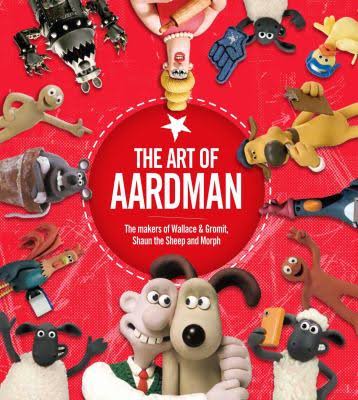
Chronicle Books has just released The Art of Aardman, featuring sketches, early models, and movie scenes from all of their stop-motion hits. It will not only remind you of all of your favorite Wallace and Gromit moments but will let you finally see all of the little jokey props that you missed in the rich environment of The Pirates! in an Adventure with Scientists! even though you have seen the film dozens and dozens of times (oh, is that just us?). It would be perfect for a youngster who is thinking about a career in animation and wants to see the process from the bottom up.
And there are so, so many of these "art of film" books. (Chronicle even has one for Coco!)
2. Collectors' Editions
Sure, pretty much everyone who wants to read Harry Potter has already, but do they have their own house-colored edition of Philosopher's Stone? There are also paperback editions in solid house colors but I think these hardcovers with the tie patterns are the best. If you are in the U.S., you can get them from The Book Depository. I already gave my niece a Ravenclaw edition for her 11th birthday this summer and she almost died when she realized it came from the U.K. and was the British text!
Also, lots of books have beautiful new editions out -- like the 10th Anniversary Edition of The Name of the Wind by Patrick Rothfuss and the Neverwhere Illustrated Edition. I'm asking for more clothbound Penguins to fill out my collection!
3. Bookish Swag
I know everyone has their own places that they like to go for swag, from your local indie bookshop to the neighborhood Barnes & Noble but I just wanted to remind everyone that you can support small businesses by heading to Etsy. There you'll find goodies like magnetic bookmarks from Wrecking Ball Design (also, you may recognize the owner when you click over there)! Just search for any author, title, or item and you'll be sure to find lots of surprises and treats.
Spendin' cheese,
K
1. Art of ... Books
Not everyone is into books and that's okay. Luckily, some of those people are into film.
With the lovely Disney-Pixar film Coco coming out later this week (we'll be seeing it in 3D on Weds), it is a great time to celebrate Day of the Dead with the first animated film to take us into the world of the dead -- Art of The Book of Life by director Jorge R. Gutierrez. This is one of Z and my most favorite films with beautiful music, a gorgeous style, and a heart-warming story. And the art style is so unique that you can totally get lost in this book while you're trying to wrap it for someone else.
Chronicle Books has just released The Art of Aardman, featuring sketches, early models, and movie scenes from all of their stop-motion hits. It will not only remind you of all of your favorite Wallace and Gromit moments but will let you finally see all of the little jokey props that you missed in the rich environment of The Pirates! in an Adventure with Scientists! even though you have seen the film dozens and dozens of times (oh, is that just us?). It would be perfect for a youngster who is thinking about a career in animation and wants to see the process from the bottom up.
And there are so, so many of these "art of film" books. (Chronicle even has one for Coco!)
2. Collectors' Editions
Sure, pretty much everyone who wants to read Harry Potter has already, but do they have their own house-colored edition of Philosopher's Stone? There are also paperback editions in solid house colors but I think these hardcovers with the tie patterns are the best. If you are in the U.S., you can get them from The Book Depository. I already gave my niece a Ravenclaw edition for her 11th birthday this summer and she almost died when she realized it came from the U.K. and was the British text!
Also, lots of books have beautiful new editions out -- like the 10th Anniversary Edition of The Name of the Wind by Patrick Rothfuss and the Neverwhere Illustrated Edition. I'm asking for more clothbound Penguins to fill out my collection!
3. Bookish Swag
I know everyone has their own places that they like to go for swag, from your local indie bookshop to the neighborhood Barnes & Noble but I just wanted to remind everyone that you can support small businesses by heading to Etsy. There you'll find goodies like magnetic bookmarks from Wrecking Ball Design (also, you may recognize the owner when you click over there)! Just search for any author, title, or item and you'll be sure to find lots of surprises and treats.
Is there anything you want to add to the list? Something you are asking for or are gifting this year?
Spendin' cheese,
K
Wednesday, October 18, 2017
#RIPXII 3-17: Agatha's Poisons
After my latest reading project, I just might be able to poison someone and get away with it. I started by picking up Kathryn Harkup's A is for Arsenic: The Poisons of Agatha Christie. I soon noticed that each of the fourteen chapters was based on a specific Christie book or short story collection and, because I wanted comfort reads this season, this project quickly formed in my head -- read or reread a classic mystery before each chapter of non-fiction. It turned out to be a wonderful idea. I loved reading the novel or stories and then delving into why the poison of choice was used and if Christie made any errors, the science of what it is and how it kills, how/if it would have been detected at the time, and some real life poisoning cases/influences. I loved the science, the history, and, yes, the Poirot (and Marple, Tommy and Tuppence, Ariadne Oliver, and even Mr. Satterthwaite). I was shocked as I reached book ten or eleven and found that I wasn't at all tired of Dame Agatha's stories. Each one was unique, with a wide variety of settings, characters, and even points of view.
These are the books I read, ranging in publication date from 1921 to 1961:
Murder is Easy
The Labours of Hercules
Sparkling Cyanide
Appointment with Death
Crooked House
Five Little Pigs
4:50 from Paddington
Three Act Tragedy
Sad Cypress
Dumb Witness
Partners in Crime
The Mysterious Affair at Styles
The Pale Horse
Lord Edgware Dies
The only person that wasn't exactly happy with this project was my husband. Apparently, having your wife learn the ins and outs of 14 deadly poisons and then recount all of the gruesome details in bed each night for weeks isn't fun. All I know is that I've already made the mistake of saying too much.
Formulating an alibi,
K
Friday, October 6, 2017
New Release: A Far, Far Better Thing to Do + GIVEAWAY
Okay, fam ... be honest with me ... the world has got you down, right? You're constantly looking for distractions but you can't always find the energy to focus on an actual book? Luckily for us, the brilliant folks at Running Press have just put out A Far, Far Better Thing to Do: A Lit Lover's Activity Book by Joelle Herr, illustrated by Lindsey Spinks. This little book is perfect for all of the times when you just want to put down your phone and pick up a pencil.
Instead of scrolling, you can put your own flair onto the portrait of Dorian Gray,
Go on a short quest to capture the white whale,
Or play a little game of Marry, Kill, "Do" where nobody else need see your answers.
![]() |
| (I really couldn't marry or "do" Poe so I guess he must die.) |
GIVEAWAY
The publisher has kindly offered to send copies of this activity book to a couple of you so, if you are interested, just leave a comment below and tell me which book you would feel most qualified to make crossword clues for. I'll be picking two winners in a week (Friday, Oct 13). International entries are okay and don't forget to leave an email address or twitter handle or something so that I can contact you! (And my answer is either Alice's Adventures in Wonderland or American Gods. Weird combo, I know.)
Brushing up on first lines,
K
Tuesday, July 25, 2017
Tesla, Tesla
The Last Days of Night is a newish release by Graham Moore, best known for his debut book, The Sherlockian. It explores the dawn of the electrical age by following the lawyer, Paul Cravath, who defended George Westinghouse in his battle with Thomas Edison over the lightbulb and direct versus alternating current. Because Nikola Tesla, after leaving the employ of Edison, spent some time working with Westinghouse and ended up selling him his AC patents, this ends up mostly being a tale of the relationships between Cravath, Westinghouse, and Tesla. There is also a love story for Cravath and a glimpse into New York high society.
At the end of the book, Moore calls it a "dramatization of history", a "Gordian knot of verifiable truth, educated supposition, dramatic rendering, and total guesswork". I thought it was fascinating and a fun read ... and it led me to finally pick up my next read from the TBR, where it has languished for years.
Tesla: Man Out of Time by Margaret Cheney is considered the definitive biography of Nikola Tesla. It is technical and mostly covers his inventions and patents but also veers into his social life and unique mental abilities. I only wish that it had been updated after the 1981 publication date because one of the most interesting parts was the discussion of how modern scientists are now putting some of Tesla's more "far-fetched" ideas to use. I know that there have been even more researchers and corporations in the last 35 years that have come to see the light about Tesla's ideas, so to speak, and it would have added even more strength to the narrative of his genius. Sometime soon I'll read Tesla's own short autobiography, maybe when I take delivery of my electric car later this year!
Plugging in to history,
K
Saturday, June 3, 2017
New Release: Not A Scientist
Ugh, you guys. When I picked up Dave Levitan's Not A Scientist: How Politicians Mistake, Misrepresent, and Utterly Mangle Science three weeks ago, I didn't expect it to be so ridiculously relevant by the time I read it. I sat here last night until 3 a.m. and read the entire 200 page book, filling it with post-its and scoffing out loud. This is a must read for anyone struggling to understand exactly how politicians manage to convince their constituents to ignore real science, regularly prefacing their stupidity with the "I'm not a scientist, but ..." line. Levitan purposely does not go into "why" because motive is near impossible to assign. He doesn't needs to discover motives though because what matters is that, let's be real, today's GOP politicians are presenting lies, half-truths, and misrepresentations of science to further their political agendas and they are harming our nation in countless ways.
This book is short and, because Levitan is a journalist, it reads like a nice, long article, very clear and easy to read. It assigns each tactic a chapter, twelve in all (with names like THE OVERSIMPLIFICATION, THE CHERRY-PICK, and THE BLIND EYE TO FOLLOWUP), that expose clear examples of each infraction and provide quick methods on how to spot them. It gives examples of politicians opposed to climate change action, wetlands preservation, and timely vaccines, just to name a few. It also shows how politicians use fake science to do things like further their anti-immigrant agendas or defund essential government programs. Levitan also includes 30+ pages of sources at the end in case you want to double check anything. All of your favorite science-denying idiots are in here -- Inhofe, Cruz, Paul, Bush (all three) -- and he even throws in a couple of Obamas to show how even a well-intentioned bad statistic can be harmful to a political cause. The only one that isn't included in the book is Trump because the book was completed before last November. The Foreword does acknowledge Trump's main tactic though, which he dubs "THE FIREHOSE", basically blasting us with an endless stream of utter crap so that we can't possibly notice/reply to it all. Yay.
This is the bottom line though --
Vigilance is the only antidote against a flood of misinformation, deception, and backwardness. If you spot any particularly egregious misuses of science from the President or any other politicians, call your senator or House representative--let them know that you want Washington to curtail its anti-science ways.You don't have to be a scientist to notice when the "science" a politician uses seem fishy or incomplete. Though answers aren't always easy to come by on the internet, there are always actual scientists and experts out there to point you in the direction of the correct data/interpretations/studies. Let's stop letting politicians and constituents get away with being willfully ignorant of science. Regardless of what some believe, the only way to attain a safe, healthy nation and world is through the proper application of scientific research.
Done lecturing (for the moment),
K
Friday, May 12, 2017
New Releases: The Zoo and The Book That Changed America
Sometimes the reading of one good book leads directly to another. The first of these I bought for my own Easter basket, the second was a library book that had almost reached its due date.
The Zoo: The Wild and Wonderful Tale of the Founding of London Zoo: 1826-1851 by Isobel Charman is just what it says in the subtitle, the story of the founding of the Zoological Society of London and, in turn, the first days of the London Zoo. I'm not sure I've mentioned this much here but my bachelor's degree is in zoology and I did two projects with many hours of observation on captive animals (sea otters!) before getting my degree. Zoos and aquariums are near and dear to my heart (and absolutely necessary if they have a conservation mission) as is Victorian London so this book couldn't have been more up my alley. It was definitely a tough read at times because of the lack of knowledge of how to properly house and care for wild animals and also their incompatibility with London's filthy air and chilly climate. This was balanced, though, by the work of some good men who truly cared and wanted to learn about the creatures they were charged with looking after.
Each chapter is written to focus on a specific man and to highlight his contribution to the zoo, be he a visionary, an architect, or an Earl. What led me to crave my next read was the chapter on Darwin, whose voyage on The Beagle and return with samples and ideas coincided with some of the first years of the zoo.
(Note: this is narrative non-fiction but Charman was very careful in using original sources to create the narrative. She added 12 pages of Notes on the Use of Sources at the end so I trust that she didn't take many liberties. Still, I know some readers aren't fans of narrative non-fic, hence this warning.)
I don't remember where I heard about Randall Fuller's The Book That Changed America: How Darwin's Theory of Evolution Ignited a Nation but I know that I immediately put a hold on it at my local library and then it sat here for weeks unread, renewed twice. Luckily, the mood struck to read it before it was due back (finished yesterday, due today) because it was incredibly relevant and educational. I expected to fall more in love with Darwin and his scholarship but I actually ended up with a newfound love and respect for Henry David Thoreau, nemesis of my high school days due to a badly-timed read of Walden. The book focuses on the literary and scientific men and women of Concord, Massachusetts and surrounding environs, their religion, Transcendentalism, and their abolitionist views in the days after Darwin's Origin of the Species arrived in the United States. Reading about Emerson, Thoreau, Alcott (father and daughter), and others as they absorbed the theory of Natural Selection and applied it to their fight for the end of slavery was fascinating. There was also a plethora of content about natural history, literature, and lifelong friendships, enough to make this a must-read book. I plan to buy my own copy of this book so that I can fill it with sticky notes. This passage felt especially relevant today--
That night [Thoreau] wrote nothing about the world beyond Concord's woods--a world that seemed increasingly on the edge of combustion, too. A few months earlier he had been utterly consumed by the John Brown affair, unable to sleep, angry, and aflame with indignation. During the winter he had willed himself to quit thinking about the nation's baleful state of affairs, its compromises and hypocrisies, its unacceptable complicity with slavery. With little faith in the political process, which he believed favored the wealthy and self-interested, Thoreau read about the upcoming Republican and Democratic conventions with derision.While reading this, I felt relieved that my feelings of late were not irrational but heartbroken that our country has yet to become the "more perfect union" that the founders envisioned. It also reminded me that regular distractions from politics are essential for good health and that a simple one can be found in any good book.
Darwin's book had helped him take his mind off these things. The Origin had redirected his thinking. It shifted his focus from a corrupt society that seemed incapable of reform to a natural world defined entirely by change and exuberant dynamism. In his journals and conversations, Thoreau still sometimes erupted in anger at Brown's unjust execution. But Darwin's theory soothed him during this period.
Evolving daily,
K
Monday, April 17, 2017
Boys in the 80s
I forget where I saw a review or comment that made me think I needed to put The Impossible Fortress by Jason Rekulak on my library hold list sooner rather than later but I saw it and I did it. It's the story of three boys that want to pull off the perfect heist of a Playboy issue. One of them is super into early computer gaming and so is the daughter of the store owner where they want to steal the magazine. This leads to an unexpected friendship and a lot of big decisions.
First, the good stuff. This story really felt true to the 80s. It made me remember early computers, crappy love songs, and old mall stores. Now the bad stuff. This story really felt true to the 80s. It reminded me of the horrible words that us 80s kids used to throw around, the casual sexism and racism, the shitty way single mothers were treated. I liked this story but I strongly disliked one of the boys and hated another one of them. The end is also a bit farfetched, although I did feel that the boy I disliked redeemed himself somewhat. All of the blurbs on the cover that use the words "sweet", "funny", "hilarious"? I'm not sure I read the same book that they did. I thought this was a dark but honest story. We may get nostalgic for the past but the day-to-day reality might not be as rosy as we remember.
My 80s itch wasn't fully scratched after that first novel so I picked up Jason Diamond's Searching for John Hughes. This book reminded me why I used to be (and need to be again) very, very picky about which memoirs I was willing to read. I did not like this guy much at all. I felt bad for him when he was a kid because both of his parents were HORRID but, ugh, how many times can someone claim to have recognized his privilege and then still go ahead acting the same way as he did before? How self-centered do you have to be to keep treating people like crap who are trying to help you and be friendly? He ultimately only gets his shit together because he is handed the job that becomes his career. This was not the love letter to the 80s that I was expecting. This guy wasn't even born until like 1980/81. Again, blurbs that use words like "hilarious" and "charm" don't make any sense to me after reading this book. It is dark and depressing and not a fun read.
So, now that I've read two books that weren't satisfying 80s reads, recommend me something about the 80s that I *will* like. (I am one of the ones that totally loved both of Ernie Cline's books, Ready Player One and Armada.) Please.
Looking back with distaste,
K
Friday, April 14, 2017
Women In Science
Women in Science: 50 Fearless Pioneers Who Changed the World by Rachel Ignotofsky is one of the books that is showing up everywhere right now. I see it recommended for kids and adults alike and the brief summaries and bright colors make that possible. It both highlights women's contributions to science AND the obstacles that they faced as they did so, giving readers knowledge and food for thought.

I did have two complaints about this book -- one is that there were too many spelling and "autocorrect"-type mistakes in the text and artwork. As a scientist, this lack of precision was off-putting. The second thing is that two or three of the scientists' bios mentioned worked on the atomic bomb and their work was described in ways that basically praised the end product. I have a problem with this kind of talk no matter what the gender of the scientist is. To have it right next to the bio of someone like Rachel Carson, whose hard work and dedication led to things like the formation of the EPA, is not cool. All science is not equal.
Still, this is a great book for showing the variety of professions that make up the sciences and the struggles that women have had over time in being allowed to work in them and to also have their work recognized. Hopefully more in-depth biographies of many of these women will be written by young people who read this book and other youngsters will be inspired to pursue studies in the sciences.
Never pipetting by mouth,
K
Monday, April 3, 2017
#Resist : What We Do Now
When I heard about What We Do Now: Standing Up For Your Values In Trump's America, I knew I needed to read it. After the election, I not only had to figure out how to clearly define my values but I wanted to be an active resister agains the things that were sure to come out of this presidency. This is a short, 200 page volume with many high-profile contributors. The essays are short but powerful (as you can see by my plethora of sticky notes). Here are some of the highlights, starting with the definition of our values--
And that marks Democrats' first job in this new era: We will stand up to bigotry. No compromises ever on this one. Bigotry in all its forms: we will fight back against attacks on Latinos, on African Americans, on women, on Muslims, on immigrants, on disabled Americans--on anyone.
--Senator Elizabeth Warren
But know this: whether you actively engage in the violent culture of hate or merely step out of the way to give it permission to persist and room to grow, you are complicit. And white people, you give permission to this culture every day you do nothing more than have "conversations on race". You don't get to just have conversations anymore. You don't get to just wear a safety pin and call yourself an ally. You don't get to just talk while the rest of us fear for our lives ... Let's be clear: White supremacy harms all of us. It strips humanity from both its victims and its beneficiaries.
--Brittany Packnett
I want you to keep telling yourself: "THIS IS NOT NORMAL. THIS IS NOT NORMAL. THIS IS NOT NORMAL. Repeat until it sinks to the deepest of your core. The minute you decide this is normal, this is just how it is, the minute you decide that appointing a white supremacist to one of the highest, most influential positions in the White House...--that is the minute that you give up. Stay vigilant. Stay focused. Stay OUTRAGED. Perpetual outrage is what's going to fuel our movements right now. In the face of this crisis, the time is now to follow your heart. You know what feels right. Think. Contemplate. Don't just follow blindly. Stay informed, read articles, verify sources, diversify your news intake. Knowledge is power. Ignoring what's happening is not going to help you or anyone else.
--Linda Sarsour
As for concrete actions:
Brittany Packnett suggests that those of us who are not in marginalized groups become not allies but accomplices, the difference being actions and not just ideals.
Ilhan Omar wants us to strengthen our communities and build a coalition and Cristina Jiménez wants us to make sure that the coalition crosses social, religious, and racial lines. We must work together to be successful.
Linda Sarsour suggests using our own skills and knowledge "for the greater good". If we all focus on what we are best at, we will be most effective.
Rabbi Sharon Kleinbaum thinks it's essential that we "continue building a full and meaningful and joyous life."
And we, of course, need to fight for a new, strong Voting Rights Act to combat voter suppression and gerrymandering. We need to demand action to mitigate climate change and to promote a clean energy economy. We need to tell/remind our representatives that we will not tolerate the targeting of an entire group based on their race or religion. We need to fight every unlawful and discriminatory action that comes out of this administration.
David Cole gives us hope from our recent history--the eventual victory over George W. Bush's horrible policies after 9/11. Bush took all sorts of liberties in the name of protecting Americans, regardless of whether those things were humane or legal. But "they protested, filed lawsuits, wrote human rights reports, lobbied foreign audiences and governments to bring pressure to bear on the United States, leaked classified documents, and broadly condemned the administration's actions as violations of fundamental constitutional and human rights. ... As a result, the course of history changed." He also says "It won't happen overnight. There will be many protracted struggles. The important thing to bear in mind is that if we fight, we can prevail."
Finally, Linda Sarsour says it best:
I hope this election is our ultimate wake-up call--a wake-up call for the silent majority who have been silent in the face of so much injustice in recent years. Silence is violence. We cannot and will not be the generation that allows our country to live again the darkest moments of our history. We must remember that our work over the next four years is not just for us, but also for the generations to come who are counting on us.Sending out strength to all fighters,
K
Saturday, February 18, 2017
New-ish Release: The Great Derangement
After I decided to make climate change and the environment my issue, I searched "climate change" on my library system webpage and first got a lot of either kid books or books that looked overly alarmist. Then I was surprised to see a recent book by a well-known novelist, Amitav Ghosh. The Great Derangement: Climate Change and the Unthinkable, is based on four lectures that Ghosh gave at the University of Chicago in 2015. It's a short book--only 160 pages--but I'm still absorbing and thinking about its ideas weeks later.
The book is divided into three parts. The first, which takes up half the book, is called Stories and it mainly explores the current state of fiction and literature and why Ghosh believes it rarely addresses climate change even though this is something looming quite large on our human horizon. He wonders why books that work all-too-real future scenarios into their plots are immediately shunted off into the fantastical bin of science fiction. He also tells his own story of being caught in a freak weather event as a young man and how this underlying story in his life has occasionally surfaced in his own fiction. This section of the book was frankly completely unexpected but utterly fascinating as a reader and I can only imagine it would be even more so for a writer. The details are explored in both his home country of India and his adopted home of New York City and it was eye-opening to explore the problem of climate change perception from opposite sides of the globe.
The second part of the book is called History and was equally fascinating. Finding out little known tidbits about Asian history (like the history of oil production in Burma) and exploring the effects of colonialism on emerging carbon-based economies was yet another aspect of climate change that I had never considered. One tends to gloss over the past and look to the future for solutions but an understanding of the past enhances the picture of what we are facing and why.
The final part of the book is Politics and was every bit as disheartening and frustrating as you might imagine. I was honestly in tears while reading one passage that voiced the futility of many of our efforts as individuals and citizens because of the far-stronger forces of corporations whose interests do not line up with an effort to combat climate change. As I was making calls to my Senators denouncing a political appointee who obviously detested the organization that he was about to head, I was forced to acknowledge that my voice would never be as loud as the dollars that were flowing in to the opposing party from powerful fossil fuel barons. I honestly set down the book at that point and questioned my choice to choose this issue as my battleground. But eventually I picked it up again and found small glimmers of hope -- from the words of Pope Francis in his Encyclical Laudato Si' in regards to our stewardship of the Earth to the ability of the U.S. Defense Department to ignore the politics of the day and focus on the real effects climate change will have on our nation and world.
This book is not an easy read, probably more so because it doesn't delve into any of the unemotional science of climate change but rather into the souls, imaginations, and intentions of flawed humans. But, if we are to survive the Great Derangement--this time when we focus too much on self when a global viewpoint is essential to survival as a species--we need a change in attitude and focus as much as we need technological innovation. I am grateful to Ghosh for tackling this tough subject in a completely unique way.
Turning my inner eye outward,
K
Tuesday, January 24, 2017
New-ish Release: Ghostland
This past weekend I participated in the 24 in 48 Readathon and the book I started with turned out to be a great one and probably my favorite of the weekend -- Ghostland: An American History in Haunted Places by Colin Dickey. On the surface, this is a collection of some of the different kinds of hauntings, grouped by the types of places where they happen -- private houses, commercial buildings, civic buildings and graveyards, and whole cities. The wonderful surprise of the book is the fact that Dickey talks mostly about the social reasons for believing in ghosts, the shortcomings of local folklore, the whitewashing of ghost stories, and other tangents. This was an incredible social science volume and I found a wealth of things to think about.
For example, one of the locations that claims to be highly haunted is an area of Richmond, Virginia called Shockoe Bottom, one of the two main ports for the reception and trade of slaves from Africa. It seems obvious that there would be copious amounts of pain and sadness in this area, right? But here's the catch. All of the ghost stories attached to local bars and stores are about WHITE ghosts. Yep. But Dickey is smart and so he spends almost all of the chapter talking about all of the horrors and history that could have/should have been preserved by ghostly means and only briefly mentions the actual stories that you will hear in Richmond. I loved this.
With very thoughtful assessments of asylums, prisons, and even religions, I couldn't get enough of this book and I plan to buy a copy (this was a library book) and use it as a launching place to learn more about some of these issues (ie, Spiritualism as a feminist movement, the history of Kirkbride psychiatric hospitals, and the haunting trope of "Indian burial grounds").
Digging up the past,
K
Subscribe to:
Posts (Atom)