Showing posts with label science. Show all posts

Wednesday, March 10, 2021

Read-Along: Nation #MarchMagics

Cover of Terry Pratchett's book Nation

Terry Pratchett's Nation is a multiverse book, a "not our world but one a lot like it" story that brings together two young people who are an unlikely pair. There is Mau, the young Pacific Islander on the cusp of manhood who loses everything when his village is destroyed by a giant wave. And there is Daphne, a British young woman who used to be Ermintrude but who used the wreck of the ship she was on to reinvent herself. Her ship, of course, wrecks on the island that used to be the home of the Nation, Mau's people. As other refugees from the storm start arriving on the island, Mau and Daphne learn to communicate and to create a new found-family as they also strive to each understand themselves better.

I couldn't have picked a better book to fit my "All Together Now" theme. So many characters come together, each with their own strengths, to build a new community from the remains of the old one. They do things that are hard and sometimes uncomfortable but it allows them to process their grief and move forward and to save each other. There is also the pro-science message of the story that seems especially timely right now.

Some things I thought about while reading, if anyone wants to discuss:
Why are we always so certain when we speak about history when we are constantly discovering new facts about what came before?
Will white supremacy ever end or will it eventually be the end of our species?
Why can't we stand up to our grandparents or other elders when they are obviously wrong/mean?
Could you survive alone (or almost alone) on a previously inhabited island?
Can you really shout underwater to scare away a shark? (I looked this one up. The answer is ... maybe sometimes.)

I hope most of you will eventually read this book if you didn't get around to it for this event. It is a fantastic story that showcases more of the philosophical side of Pratchett. There is definitely still humor but it takes a backseat in this one and I found it refreshing. Of course I'm reading Guards! Guards! right now so I can obviously appreciate all of the humor as well. He really was one of the best.

Wednesday, October 18, 2017

#RIPXII 3-17: Agatha's Poisons


After my latest reading project, I just might be able to poison someone and get away with it. I started by picking up Kathryn Harkup's A is for Arsenic: The Poisons of Agatha Christie. I soon noticed that each of the fourteen chapters was based on a specific Christie book or short story collection and, because I wanted comfort reads this season, this project quickly formed in my head -- read or reread a classic mystery before each chapter of non-fiction. It turned out to be a wonderful idea. I loved reading the novel or stories and then delving into why the poison of choice was used and if Christie made any errors, the science of what it is and how it kills, how/if it would have been detected at the time, and some real life poisoning cases/influences. I loved the science, the history, and, yes, the Poirot (and Marple, Tommy and Tuppence, Ariadne Oliver, and even Mr. Satterthwaite). I was shocked as I reached book ten or eleven and found that I wasn't at all tired of Dame Agatha's stories. Each one was unique, with a wide variety of settings, characters, and even points of view.

These are the books I read, ranging in publication date from 1921 to 1961:

Murder is Easy
The Labours of Hercules
Sparkling Cyanide
Appointment with Death
Crooked House
Five Little Pigs
4:50 from Paddington
Three Act Tragedy
Sad Cypress
Dumb Witness
Partners in Crime
The Mysterious Affair at Styles
The Pale Horse
Lord Edgware Dies

I want to point out too that Harkup's book has the most amazing appendix -- a list of every Agatha Christie story and how all of the people die in them! I still have a few Agatha books that I haven't read (I own 66 of her books, not counting her autobiography and her travelogues) but when I'm done, I'll really dive into that appendix.

The only person that wasn't exactly happy with this project was my husband. Apparently, having your wife learn the ins and outs of 14 deadly poisons and then recount all of the gruesome details in bed each night for weeks isn't fun. All I know is that I've already made the mistake of saying too much.

Formulating an alibi,
K

Tuesday, July 25, 2017

Tesla, Tesla


The Last Days of Night is a newish release by Graham Moore, best known for his debut book, The Sherlockian. It explores the dawn of the electrical age by following the lawyer, Paul Cravath, who defended George Westinghouse in his battle with Thomas Edison over the lightbulb and direct versus alternating current. Because Nikola Tesla, after leaving the employ of Edison, spent some time working with Westinghouse and ended up selling him his AC patents, this ends up mostly being a tale of the relationships between Cravath, Westinghouse, and Tesla. There is also a love story for Cravath and a glimpse into New York high society.

At the end of the book, Moore calls it a "dramatization of history", a "Gordian knot of verifiable truth, educated supposition, dramatic rendering, and total guesswork". I thought it was fascinating and a fun read ... and it led me to finally pick up my next read from the TBR, where it has languished for years.


Tesla: Man Out of Time by Margaret Cheney is considered the definitive biography of Nikola Tesla. It is technical and mostly covers his inventions and patents but also veers into his social life and unique mental abilities. I only wish that it had been updated after the 1981 publication date because one of the most interesting parts was the discussion of how modern scientists are now putting some of Tesla's more "far-fetched" ideas to use. I know that there have been even more researchers and corporations in the last 35 years that have come to see the light about Tesla's ideas, so to speak, and it would have added even more strength to the narrative of his genius. Sometime soon I'll read Tesla's own short autobiography, maybe when I take delivery of my electric car later this year!

Plugging in to history,
K

Saturday, June 3, 2017

New Release: Not A Scientist


Ugh, you guys. When I picked up Dave Levitan's Not A Scientist: How Politicians Mistake, Misrepresent, and Utterly Mangle Science three weeks ago, I didn't expect it to be so ridiculously relevant by the time I read it. I sat here last night until 3 a.m. and read the entire 200 page book, filling it with post-its and scoffing out loud. This is a must read for anyone struggling to understand exactly how politicians manage to convince their constituents to ignore real science, regularly prefacing their stupidity with the "I'm not a scientist, but ..." line. Levitan purposely does not go into "why" because motive is near impossible to assign. He doesn't needs to discover motives though because what matters is that, let's be real, today's GOP politicians are presenting lies, half-truths, and misrepresentations of science to further their political agendas and they are harming our nation in countless ways.

This book is short and, because Levitan is a journalist, it reads like a nice, long article, very clear and easy to read. It assigns each tactic a chapter, twelve in all (with names like THE OVERSIMPLIFICATION, THE CHERRY-PICK, and THE BLIND EYE TO FOLLOWUP), that expose clear examples of each infraction and provide quick methods on how to spot them. It gives examples of politicians opposed to climate change action, wetlands preservation, and timely vaccines, just to name a few. It also shows how politicians use fake science to do things like further their anti-immigrant agendas or defund essential government programs. Levitan also includes 30+ pages of sources at the end in case you want to double check anything. All of your favorite science-denying idiots are in here -- Inhofe, Cruz, Paul, Bush (all three) -- and he even throws in a couple of Obamas to show how even a well-intentioned bad statistic can be harmful to a political cause. The only one that isn't included in the book is Trump because the book was completed before last November. The Foreword does acknowledge Trump's main tactic though, which he dubs "THE FIREHOSE", basically blasting us with an endless stream of utter crap so that we can't possibly notice/reply to it all. Yay.

This is the bottom line though -- 
Vigilance is the only antidote against a flood of misinformation, deception, and backwardness. If you spot any particularly egregious misuses of science from the President or any other politicians, call your senator or House representative--let them know that you want Washington to curtail its anti-science ways.
You don't have to be a scientist to notice when the "science" a politician uses seem fishy or incomplete. Though answers aren't always easy to come by on the internet, there are always actual scientists and experts out there to point you in the direction of the correct data/interpretations/studies. Let's stop letting politicians and constituents get away with being willfully ignorant of science. Regardless of what some believe, the only way to attain a safe, healthy nation and world is through the proper application of scientific research.

Done lecturing (for the moment),
K

Friday, May 12, 2017

New Releases: The Zoo and The Book That Changed America

Sometimes the reading of one good book leads directly to another. The first of these I bought for my own Easter basket, the second was a library book that had almost reached its due date.


The Zoo: The Wild and Wonderful Tale of the Founding of London Zoo: 1826-1851 by Isobel Charman is just what it says in the subtitle, the story of the founding of the Zoological Society of London and, in turn, the first days of the London Zoo. I'm not sure I've mentioned this much here but my bachelor's degree is in zoology and I did two projects with many hours of observation on captive animals (sea otters!) before getting my degree. Zoos and aquariums are near and dear to my heart (and absolutely necessary if they have a conservation mission) as is Victorian London so this book couldn't have been more up my alley. It was definitely a tough read at times because of the lack of knowledge of how to properly house and care for wild animals and also their incompatibility with London's filthy air and chilly climate. This was balanced, though, by the work of some good men who truly cared and wanted to learn about the creatures they were charged with looking after.

Each chapter is written to focus on a specific man and to highlight his contribution to the zoo, be he a visionary, an architect, or an Earl. What led me to crave my next read was the chapter on Darwin, whose voyage on The Beagle and return with samples and ideas coincided with some of the first years of the zoo.

(Note: this is narrative non-fiction but Charman was very careful in using original sources to create the narrative. She added 12 pages of Notes on the Use of Sources at the end so I trust that she didn't take many liberties. Still, I know some readers aren't fans of narrative non-fic, hence this warning.)


I don't remember where I heard about Randall Fuller's The Book That Changed America: How Darwin's Theory of Evolution Ignited a Nation but I know that I immediately put a hold on it at my local library and then it sat here for weeks unread, renewed twice. Luckily, the mood struck to read it before it was due back (finished yesterday, due today) because it was incredibly relevant and educational. I expected to fall more in love with Darwin and his scholarship but I actually ended up with a newfound love and respect for Henry David Thoreau, nemesis of my high school days due to a badly-timed read of Walden. The book focuses on the literary and scientific men and women of Concord, Massachusetts and surrounding environs, their religion, Transcendentalism, and their abolitionist views in the days after Darwin's Origin of the Species arrived in the United States. Reading about Emerson, Thoreau, Alcott (father and daughter), and others as they absorbed the theory of Natural Selection and applied it to their fight for the end of slavery was fascinating. There was also a plethora of content about natural history, literature, and lifelong friendships, enough to make this a must-read book. I plan to buy my own copy of this book so that I can fill it with sticky notes. This passage felt especially relevant today--
That night [Thoreau] wrote nothing about the world beyond Concord's woods--a world that seemed increasingly on the edge of combustion, too. A few months earlier he had been utterly consumed by the John Brown affair, unable to sleep, angry, and aflame with indignation. During the winter he had willed himself to quit thinking about the nation's baleful state of affairs, its compromises and hypocrisies, its unacceptable complicity with slavery. With little faith in the political process, which he believed favored the wealthy and self-interested, Thoreau read about the upcoming Republican and Democratic conventions with derision.
Darwin's book had helped him take his mind off these things. The Origin had redirected his thinking. It shifted his focus from a corrupt society that seemed incapable of reform to a natural world defined entirely by change and exuberant dynamism. In his journals and conversations, Thoreau still sometimes erupted in anger at Brown's unjust execution. But Darwin's theory soothed him during this period.
While reading this, I felt relieved that my feelings of late were not irrational but heartbroken that our country has yet to become the "more perfect union" that the founders envisioned. It also reminded me that regular distractions from politics are essential for good health and that a simple one can be found in any good book.

Evolving daily,
K

Friday, April 14, 2017

Women In Science


Women in Science: 50 Fearless Pioneers Who Changed the World by Rachel Ignotofsky is one of the books that is showing up everywhere right now. I see it recommended for kids and adults alike and the brief summaries and bright colors make that possible. It both highlights women's contributions to science AND the obstacles that they faced as they did so, giving readers knowledge and food for thought.


I did have two complaints about this book -- one is that there were too many spelling and "autocorrect"-type mistakes in the text and artwork. As a scientist, this lack of precision was off-putting. The second thing is that two or three of the scientists' bios mentioned worked on the atomic bomb and their work was described in ways that basically praised the end product. I have a problem with this kind of talk no matter what the gender of the scientist is. To have it right next to the bio of someone like Rachel Carson, whose hard work and dedication led to things like the formation of the EPA, is not cool. All science is not equal.

Still, this is a great book for showing the variety of professions that make up the sciences and the struggles that women have had over time in being allowed to work in them and to also have their work recognized. Hopefully more in-depth biographies of many of these women will be written by young people who read this book and other youngsters will be inspired to pursue studies in the sciences.

Never pipetting by mouth,
K

Saturday, February 18, 2017

New-ish Release: The Great Derangement


After I decided to make climate change and the environment my issue, I searched "climate change" on my library system webpage and first got a lot of either kid books or books that looked overly alarmist. Then I was surprised to see a recent book by a well-known novelist, Amitav Ghosh. The Great Derangement: Climate Change and the Unthinkable, is based on four lectures that Ghosh gave at the University of Chicago in 2015. It's a short book--only 160 pages--but I'm still absorbing and thinking about its ideas weeks later.

The book is divided into three parts. The first, which takes up half the book, is called Stories and it mainly explores the current state of fiction and literature and why Ghosh believes it rarely addresses climate change even though this is something looming quite large on our human horizon. He wonders why books that work all-too-real future scenarios into their plots are immediately shunted off into the fantastical bin of science fiction. He also tells his own story of being caught in a freak weather event as a young man and how this underlying story in his life has occasionally surfaced in his own fiction. This section of the book was frankly completely unexpected but utterly fascinating as a reader and I can only imagine it would be even more so for a writer. The details are explored in both his home country of India and his adopted home of New York City and it was eye-opening to explore the problem of climate change perception from opposite sides of the globe.

The second part of the book is called History and was equally fascinating. Finding out little known tidbits about Asian history (like the history of oil production in Burma) and exploring the effects of colonialism on emerging carbon-based economies was yet another aspect of climate change that I had never considered. One tends to gloss over the past and look to the future for solutions but an understanding of the past enhances the picture of what we are facing and why.

The final part of the book is Politics and was every bit as disheartening and frustrating as you might imagine. I was honestly in tears while reading one passage that voiced the futility of many of our efforts as individuals and citizens because of the far-stronger forces of corporations whose interests do not line up with an effort to combat climate change. As I was making calls to my Senators denouncing a political appointee who obviously detested the organization that he was about to head, I was forced to acknowledge that my voice would never be as loud as the dollars that were flowing in to the opposing party from powerful fossil fuel barons. I honestly set down the book at that point and questioned my choice to choose this issue as my battleground. But eventually I picked it up again and found small glimmers of hope -- from the words of Pope Francis in his Encyclical Laudato Si' in regards to our stewardship of the Earth to the ability of the U.S. Defense Department to ignore the politics of the day and focus on the real effects climate change will have on our nation and world.

This book is not an easy read, probably more so because it doesn't delve into any of the unemotional science of climate change but rather into the souls, imaginations, and intentions of flawed humans. But, if we are to survive the Great Derangement--this time when we focus too much on self when a global viewpoint is essential to survival as a species--we need a change in attitude and focus as much as we need technological innovation. I am grateful to Ghosh for tackling this tough subject in a completely unique way.

Turning my inner eye outward,
K

Sunday, September 29, 2013

Picture Books To Teach 1000 and More Lessons

Sometimes I wish that I was homeschooling Z because there are so many fantastic non-fiction picture books out there that I could use in a variety of subjects.

There are books about science like


Electrical Wizard: How Nikola Tesla Lit Up the World, written by Elizabeth Rusch, illustrated by Oliver Dominguez, might not fully represent the handsomeness of this scientist but it does portray the hard work and genius of the man. It starts with Tesla's childhood in Serbia (including the name of his cat), moves through his college years and finishes with his professional life. It also has six pages of history and science at the end and a great bibliography.

There are books about math like


Mesmerizing Math by Jonathan Litton and Thomas Flintham is a totally amazing flap-and-tab book that gives a quick introduction to dozens of math concepts, from geometry to tessellation. Z was fascinated by this book and all of its hidden information. I like that it makes math fun and accessible. This book obviously won't teach kids everything they need to know about the diverse ideas (it's only 16 pages long), but it will give kids a familiarity with concepts and terms that should help later when they reach these concepts in their studies.

There are books about animals like


and


The Organic Bug Book by Chris Korrow (farmer) attempts to get kids to look past the ick factor that they may have learned from squeamish parents to the true usefulness and fascinating qualities of a variety of insects. Not all bugs are welcomed by farmers but many are grouped together unfairly with the true pests. This book tries to clear up some of the misconceptions and to celebrate the diversity of insects.

Marije Tolman (artist) and Jesse Goossens' (writer) Jumping Penguins is a beautiful tribute to the many amazing qualities of animals that one might see at a zoo. The artwork is not realistic (bats have bandages, polar bears are painting and there's a blue whale on a scale) but the book is oh so fun and the facts might be ones that you haven't heard before -- bison can jump six feet vertically, polar bears are left-handed and caterpillars throw their poop away from their bodies to confuse wasps that would want to eat them.  This would be a fantastic gift book as well because it's just so attractive!

And there are books about places like


This beautiful duo from Charlotte Dematons, Holland and A Thousand Things About Holland (with text by Jesse Goossens), give a wonderful introduction to a beautiful country. One is a book without words, simply presenting Holland from the water through the busy cities and on to the countryside. It has many details that should give young readers an idea of the things that make Holland unique. The other is, well, a book of a thousand pieces of information and literature about Holland's history, weather, cities, people, art and more told from the unique perspective of Dematons, who was born in France but studied art in Amsterdam. Obviously, with 1000 "things", there's a lot to learn about Holland, especially for kids with little previous exposure to the country.

Luckily, there are no limits on where one can learn, so we can bring all of these books into our home anyway (and you might want some of them in your home too).

Learning the fun and colorful way,
K and Z

Friday, February 22, 2013

New Release: Why is Milk White? & 200 Other Curious Chemistry Questions


With questions by a curious teen and answers from a real-life chemist, Why is Milk White? & 200 Other Curious Chemistry Questions by Alexa Coelho and Simon Quellen Field is a great resource for inquiry-minded children and hopefully a nudge in the right direction for those who are on the fence about science. Appropriate for ages 8-9 and older, this book introduces kids to the building blocks of chemistry through questions in categories like "People and Animals", "Household Chemistry" and "Things That Stink". There are also molecular diagrams and some experiments to investigate certain topics further.

As parents with science degrees (zoology for me and physics/math for him), we're always injecting a bit of science into Z's life and trying to instill in him a curiosity about how things work. Between the two of us, we have answers for how/why many things work but we don't always know which questions will trigger his interest and imagination. A book like this is fantastic in its variety as there should be something that appeals to almost every child. And since STEM (Science, Technology, Engineering, Mathematics) jobs are on the rise and are some of the highest paying jobs out there, it can't hurt to see if your kid has an aptitude for biochemistry, materials science or another of the wide variety of science fields out there. And, of course, there's a good chance that parents/educators will learn something new from this book too! (I learned things I didn't know about moisturizers and hydrogen peroxide.)

Investigating the world's mysteries together,
K and Z

Wednesday, December 5, 2012

A Week of Gift Ideas: For Collectors and Nature Enthusiasts

Today's offering is one that I requested from Sterling without quite realizing what it would be. When it arrived, I was floored by what a gorgeous product it is.


This is actually the front of a hardcover case that contains both a book of essays and dozens of printed plates. Natural Histories: Extraordinary Rare Book Selections from the American Museum of Natural History Library has something special for students of natural history, history and art.

From the publisher --
For the first time, Natural Histories allows readers a privileged glimpse of seldom-seen, fully illustrated scientific tomes from the American Museum of Natural History's Rare Book Collection. Forty essays from the museum's top experts in a variety of natural science disciplines, from anthropology to zoology, accompany and discuss each rare work's unique qualities and scientific contribution. Packaged with 40 extraordinary prints suitable for framing and facsimile items inside bound-in envelopes, this deluxe edition will fascinate both natural science and art lovers alike.
If you have someone in your life that you think would appreciate this sort of thing, this would be a unique and thoughtful gift. As for me, I will be shopping for frames soon as I plan to choose my favorite prints for a wall collage. I might even include one or two of my own drawings (which I would share with you if I could find them but alas, I seem to have "put them away" somewhere).

Celebrating the art of science,
K

Wednesday, October 31, 2012

RIP VII Read #15: Ghost Hunters


I snuck one non-fiction book in this RIP season and it was a great one. The Poisoner's Handbook was my final RIP read last year (and an absolutely fantastic read) so it's only fitting that Deborah Blum got that coveted spot again this year with Ghost Hunters: William James and the Search for Scientific Proof of Life After Death. I didn't love this one as much as Poisoner but I still thought it was a very solid and fascinating study of spiritualism in the late 19th century and the attempt by scientists and philosophers to investigate its practitioners. Because I read so many novels that feature spiritualism (especially ones that are set in Victorian times), this was a perfect companion to those books. As for my own personal views on the subject, like Blum I am a scientist and a skeptic but, when confronted with quality evidence, I can't help but wonder if there's some truth there, some unexplained force in the ether. I'm like 90 percent Scully, 10 percent Mulder. The truth is out there but it seems somewhat unlikely that enough evidence will ever be collected to prove anything conclusively.

How about you? Do you believe in spirits or ghosts, telepathy or telekinesis?

Not sure if I want to believe,
K

Friday, April 13, 2012

A Hefty Journey Through Modernist Cuisine


This may not be the most appetizing imagery when discussing a cookbook but Modernist Cuisine has blown my mind. I meant to have this review done over a month ago but I just couldn't skim these amazing books after all. I ended up reading most of this 50 pound behemoth, my mind whirring with all sorts of revelations and notions. Nathan Myhrvold, Chris Young and Maxime Bilet have created something that cannot just be called a cookbook. Yes, there are recipes--mostly in volume 5 and 6--but I found the first four volumes to be where the real meat of this series was.

Each volume has something different to offer. Volume One is "History and Fundamentals" and it delivers. There's not only a history of cooking itself, from cooking fires to fast food, but also tidbits of food safety and some good, old-fashioned debunking of common kitchen/food myths. This volume will appeal to students of history and science. It explains what modernist cuisine is ("a new, intellectually motivated cuisine ... [with] a trend toward general appreciation of the scientific basis for cooking", pg. 1-52) and it has a few pages about how this book came to be. My BFF would be happy to know that there's a large section called "Microbiology for Cooks" that discusses various foodborne illnesses and the best ways to avoid them. This was an incredibly full volume and I wish I could share a list of all of the things I found fascinating but I would probably end up typing for hours. (P.S. MSG isn't actually bad for you and grilled meats might not increase your risk of cancer.)

Volume Two is "Techniques and Equipment" and it appears to be the largest volume in the set. The title is pretty self-explanatory as well. It covers classic and modern cooking techniques and talks about some of the equipment that you would find in a modernist kitchen. The most important technique seems to be "sous vide"-- cooking food in a water bath for even temperature distribution and control. If you ever wanted a better understanding of how each cooking technique (eg., boiling, broiling, sautéing) actually works, this is the place to look. Because of the large amount of information overload, the only thing that I took away from this volume is that when we go grill shopping this summer, we will be looking for a non-dome-shaped charcoal grill -- avoiding the uneven heat distribution of the dome and the flavorless cooking of a gas grill. I wish I could have absorbed so much more from this one!


Volume Three may be the most detailed volume though it is simply called "Animals and Plants". The first half--Animals--presents what the authors believe are the best ways to prepare many of the edible animals out there, from shellfish to duck. I have to say that it was a bit disturbing to see a picture of a live octopus that mentions its "curiosity, cleverness, and mischievousness" (pg. 3-24) on the opposite page from a mention of the many techniques to tenderize their tough flesh. But if you are looking for techniques for anything from squaring a large cut of tuna for sashimi to making sausages, it's probably in here. And then there are the Plants, fruits and vegetables, but this part of the volume is much smaller -- leading me to believe that either the authors are satisfied with many of the existing cooking and presentation methods for them or that they are not as central to modernist cuisine as meat is. Although, it could also mean that the techniques and preparations shown can be used on a wide variety of plant foods and don't need to be repeated in every iteration possible. After reading this volume, I definitely added a vacuum sealer to my kitchen wish list for quick marinades.

Volume Four is called "Ingredients and Preparations" and this is another highly interesting volume. From curing to gels, this volume covers all sorts of daunting techniques. I got a bit lost among the many specialized ingredients used to create gels, emulsions and more. But I now know (theoretically) how to make the perfect cup of espresso. In Seattle, this is a much-coveted skill!

Volume Five finally brings everything together into Plated-Dish Recipes. This is the only volume that I really skimmed. It appears that I'm more interested in the theoretical side of cooking than in the practical side. I guess this is where I admit that I'm much more adept at baking that cooking and that my techniques tend toward the simple, one-pot variety. Still, to see all of the possibilities out there makes me feel just a bit more adventurous and one day I might try a true modernist plated dish.

There is also a final volume--Kitchen Manual--that does not fit in the case but is spiral bound, something any cook will appreciate. This is the volume that most resembles a standard cookbook but without any of the 3500 pictures that grace the other five volumes, as it is the practical companion to the others. If I was to copy out one recipe to try later, it might be the Cantonese Fried Rice, now that I know the true role of high heat in a stir fry. Then again, it might be the Meyer Lemonade -- if I happen to have some fructose, citric acid and gum arabic around. Of course, it could be the Flank Steak Sous Vide with the Sweet Potato Fondant and a Salted Caramel Apple Puree for dessert. Or I could just hire a personal chef. Yes, I think that's the solution.


Modernist Cuisine contains some amazing and revolutionary photography including many "cut-away" shots -- like this one of a pot roast in a dutch oven under coals. I wish I could share more of the photographs with you. They are part of the reason that I took so long getting through these volumes. They are truly works of art in their own way. And I have to say that the authors are surprisingly not snobbish about food at all. They are just as interested in making the perfect burger and fries as they are in the perfect fois gras. This made for a much more enjoyable reading experience than I expected.


I would like to thank Intellectual Ventures, Nathan Myrhvold's tech company, for the chance to borrow these volumes for review. I have only two wishes now. One is for six hundred and twenty five dollars so that I can own my own set of these books (only $450 on Amazon!) and the other is for a kitchen lab like the one above so that I can get to trying out some modernist techniques. In the meantime, I will have to be satisifed with the online Recipe Library, the Modernist Cuisine blog and my tiny, poorly-stocked kitchen.

Cooking up plans,
K

Tuesday, January 3, 2012

A Literary Love Letter to Matthew Pearl

Dear Matthew Pearl,

Many years ago, when I used to find my next read solely by wandering the aisles of my local Barnes & Noble, I happened upon your first novel -- The Dante Club.


I thought it was a fantastic book, putting well-known American authors Longfellow, Holmes and Lowell in a shockingly dark adventure based on the writings of Dante. I liked it so much that I gave it to my mom to read and she liked it too (except for the part about the maggots which she still brings up every once in a while as being just a bit too vivid and memorable). The only problem was that I didn't know much about these authors before reading the book and so, while I had a great time with the story, it didn't mean quite as much as if those authors had been literary "friends" of mine.


Then, in 2006, I was thrilled to find that your next novel did feature a chum of mine, a recently deceased Edgar Allan Poe. The Poe Shadow is about a very likable young lawyer, Quentin Clark, who can't believe the rumors flying about Poe after his untimely death. He follows the clues that many die-hard Poe fans have also followed over the years to try and prove that Poe's bad reputation was not in fact true. It was a fantastic novel that brought an unsolved mystery back to life in vivid color.


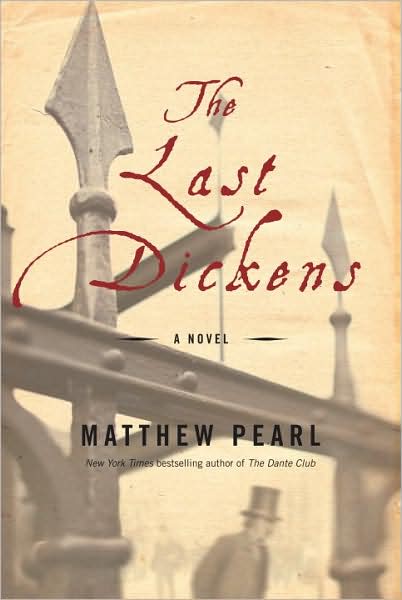
And then, just a couple of years ago, I almost fainted when you tackled the death of my beloved Charles Dickens and the missing ending of his final novel, The Mystery of Edwin Drood. After a less than satisfying experience with another novel about the same subject that came out around the same time, this story turned out to be just what I was looking for. I wasn't disappointed with your book at all.


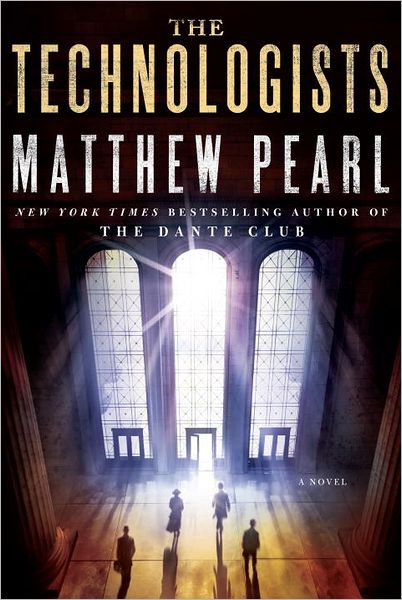
Finally, last month I had the pleasure to read an early copy of The Technologists, which will be coming out in February. Like The Dante Club, I wasn't previously familiar with the characters or setting--the first graduating class of M.I.T., The Massachusetts Institute of Technology--but, by the end of the story, I became more invested in the lives of these young men (and women) than I would have thought possible. In fact, I was disappointed when the book ended because I wanted to follow your characters through the rest of their lives and even back into their pasts. With fascinating studies of science versus religion, Tech versus Harvard, women in education, the Civil War and more, this was a deep and thoughtful book that also read as a love letter to Boston, a city with a long history. And the mystery, oh, the mystery! I almost wrote you half-way through reading the book because I thought I was so clever and had it all figured out. But I was wrong and couldn't have been happier to be so. I didn't feel cheated or misdirected at all. I simply followed the clues, as did Marcus and the other Tech students. Even the best scientist can only form conclusions with the facts he or she has at hand.

And writing a prequel short story, The Professor's Assassin, was a brilliant way to set the stage for why M.I.T. was so important, especially to its founder, William Barton Rogers. It also avoided the increasingly-present Prologue that is starting to bother some readers of modern novels. And now I've just found some novellas and short stories on the website for The Technologists about Marcus, Edwin and Ellen and I'm incredibly excited to read about the students' time at M.I.T. It's exactly what I was wishing for!

One of my reading resolutions for this year is to re-read your first three novels and I may even throw in a re-read of The Technologists at the end of the year for good measure because it was just that good. Thank you for writing books that I want to read over and over. I hope to convince a few other readers to pick them up as well.

Yours in literature and history,
K

Wednesday, November 2, 2011

Late RIP Post: The Poisoner's Handbook

The last book I read for the RIP Challenge (and finished hours before my wrap-up post but didn't bother to go back and change it) was the thoroughly awesome The Poisoner's Handbook: Murder and the Birth of Forensic Medicine in Jazz Age New York by Deborah Blum. I loved this book. I don't say that very often but this was the perfect read for me. It had the right amount of history and science and murder to fit right in the niche that my brain is happiest in.

This book won't be for everyone. As you can tell from the title, the birth of forensic medicine is going to include a lot of details about gory (yet fascinating things) -- autopsies, brain tissue disintegration for testing, examination of lung tissue after poisoning and all sorts of other bloody tests. There's also no avoiding the animal testing that had to happen at the time to measure the effects of various toxins in order to have reliable data, the kind necessary to secure convictions and send murderers to the electric chair.

I'm mostly against animal testing and possibly against the death penalty and certainly against murdering family members but I still found every aspect of this book fascinating. It made me regret that I didn't take those three extra classes to get a minor in chemistry. My scientific background helped me through the book but I don't think one is necessary to understand what Blum is presenting. Her love for chemistry also comes through in her writing and I thought it was refreshing and highly readable.

On cloud nine,
K

Thursday, March 10, 2011

Scientists Are Our Friends

I strongly feel that exposure to a variety of subjects helps kids to be more open-minded about and less intimidated by those subjects later when they encounter them in school. This is why Z has a periodic table on his bedroom wall, why we do small experiments in the kitchen and why I'm always excited to find a good picture book biography to introduce another amazing person to Z. We're already in love with Dan Yaccarino's book about Jacques Cousteau, we're looking forward to Patrick McDonnell's book about Jane Goodall and now we have enjoyed Meet Einstein, written by Mariela Kleiner and illustrated by Viviana Garofoli.

Geared for preschoolers but fun for all youngsters, this is a book that introduces a few of the many roles of scientists to kids, including a basic introduction to the subjects that Einstein himself studied -- light and gravity. It shows all sorts of children doing basic science and gives examples of many of the every day things that can be explored. There's even a parents' section at the end that gives some facts about Albert Einstein and lists some questions that one could use to inspire and teach kids.

This book has the cutest endpapers I've ever seen and Garofoli's Einstein is adorable. The website for this book has some fun activities too, including a "Make Your Own Einstein" art project. And don't forget to celebrate Albert Einstein's birthday next week on March 14th!

Reveling in the joy of discovery,
K


Support our site and buy Meet Einstein on Amazon or find it at your local library. We received a copy of this book for review.

Tuesday, October 26, 2010

RIP Read #21: The Angel Maker

A real surprise for me this year was The Angel Maker by Stefan Brijs.  I was expecting a horror novel about misshapen monster children and the mad scientist that brought them to life.  Instead, I got a thought-provoking (yet still quite horrific) look at human cloning in the hands of a doctor with a skewed world view.  I suppose that many times true horror comes from the realm of the possible.

Victor Hoppe was born in the small town of Wolfheim (a fictional town near Vaalserberg, the intersection between Belgium, Germany and The Netherlands) but was immediately rejected by his mother and sent off to a local religious asylum because of his terrible cleft palate.  The nuns had surgeries done to mostly correct the issue but Victor stayed on when they assumed that he was also an imbecile.  However, when it turned out that Victor was instead autistic and quite bright but just not very verbal or social, his father took him back home.  He wasn't there long though before he was sent off to a religious boarding school.  These events gave Victor a skewed view of religion and eventually he turned to medicine and genetics as a way to beat God at his own game -- a game that seemed to him only to include pain and suffering.  Unfortunately Victor's lack of social mores and moral judgment leads him down a slippery slope where humans are treated no different from other medical test subjects like mice.

This novel really blew me away.  It took some time to get used to the fact that it changes narrators, point of view and time periods quite frequently.  At first I thought it was a problem with the translation from Dutch but then it appeared to be by design.  Hoppe's actions are horrific and yet you can easily sympathize with his motivations and understand where things went wrong in his mental development.  This was a mind-opening read and I found it even more fascinating after reading Spook.  Both books addressed the intersection between science and religion but in vastly different ways.  While Spook felt more light-hearted and the results of the experiments seemed quite inconsequential, The Angel Maker was the opposite with intense and painful decisions leading to suffering and tragedy.  It's hard to craft a coherent review because this book hits you with new thoughts and feelings each time you think about it again.  It's strange then to admit it but I really did enjoy this book and found it to be quite compelling.

Broken-hearted and horrified,
K


Support our site and buy The Angel Maker on Amazon or find it at your local library.  We own our own copy.

Monday, October 25, 2010

RIP Read #20: Spook

I'll admit up front that I'm not a huge fan of popular science books.  My scientific mind is rarely satisfied by the simplified way that most of the topics are presented.  Either there is not sufficient information given to explain something well enough or things are so over-simplified that they become slightly false.  Luckily, in Spook: Science Tackles the Afterlife, Mary Roach attacks a topic that has very few real results and does it in a way that admits the gaping holes but also allows for the possibilities of, well, possibilities.

As the title implies, Spook takes a look at some of the research, both past and current, that has been used to try and provide proof of a soul and proof of an afterlife where that personal essence continues on past bodily death.  It also touches on the spiritualist movement which I've always been interested in.

I have the impression that Roach had much the same approach to the subject as I do.  I find the quest for proof fascinating (and amusing) but I'm skeptical enough to not really expect any of these experiments to ever pan out.  I'll watch an episode of Ghost Hunters International every once in a while but honestly it's more for the unique look at historical buildings than for the ghost hunting.  I never hear the voice on the EVP (electronic voice phenomena) recordings and the lights that move across the room always seem like the headlights from a passing car or dust caught in the light on the camera.  Old buildings creak and sigh and are quite drafty at times.  Just the other day there was a mysterious cold spot right in the center of my living room.  I felt it more than once and couldn't explain it -- not until I remembered leaving the flue open after turning off the gas fireplace a week earlier.

So, overall I found this book amusing but not especially informative or life-changing.  Roach has a very conversational and snarky writing style which may put some readers off (especially those who want to believe) but others will surely be amused by her irreverence.  I am willing to check out her take on some of the other subjects that she has researched -- namely sex, cadavers and space travel.

The truth might not be out there,
K


Support our site and buy Spook: Science Tackles the Afterlife on Amazon or find it at your local library.  We received our copy from our lovely blog buddy, Jenners.  Here is her review.

Tuesday, September 21, 2010

RIP Read #5: New Release: The Wave

When I first picked up The Wave by Susan Casey, I didn't anticipate it being an RIP read.  But the feelings of peril and adventure that I felt while reading of storm-tossed ships and death-defying surfers made this a perfectly scary read!  My paranoia has been renewed about the inevitable giant Pacific Northwest quake and I'm reconsidering thoughts of moving back to Hawaii.

Part science lesson in wave mechanics and weather, part eulogy for ships lost at sea and part travel log of big wave surfers that are looking for elusive hundred-foot giants, this was one of the fastest non-fictions reads I've ever picked up.  The bulk of the narrative follows the surfers with brief forays into the other aspects of this topic.  This makes for a book that should hold interest for anyone who loves and/or fears the ocean.  The book certainly restored my respect for the seas and built my respect of these men and women, scientists and surfers alike, who attempt to master the strongest forces on earth.

You can listen to an interview with Susan Casey and Laird Hamilton (or read a transcript and an excerpt from the book) on NPR here.

Relocating my dreams of an oceanside home,
K


Support our site and buy The Wave: In Pursuit of the Rogues, Freaks and Giants of the Ocean on Amazon or find it at your local library.  We received a galley for review.

Friday, July 16, 2010

New Release: Lady of the Butterflies

One of my favorite subjects for a novel is a little-known historical character.  We all know about Darwin and Dickens and Lincoln, but science and politics and literature are built on much more than just the backs of a few geniuses.  In Lady of the Butterflies, Fiona Mountain brings to life Eleanor Glanville, a woman whose innate interest in natural history led to many of the joys of her life but also the sorrows.

Eleanor was mostly raised by her father, a staunch Puritan, to be modest and chaste but also to appreciate learning and to love nature.  Unfortunately, after her father's early death, Eleanor is left without guidance and, while indulging her passions, finds herself in many unfortunate situations.  Still, through her curiosity and love for butterflies, she finds the peace and fulfillment she seeks.

There were many things to like about this novel.  The seventeenth-century fens and wetlands are almost their own character -- so much so that I found myself frequently drawing parallels to today's conservationist and restorationist ideas.  And I always appreciate the study of early women scientists and the hurdles that they faced in pursuing their interests in a male-only profession.  And yet, parts of this book rubbed me the wrong way.  Without giving anything away, I can only say that I have a problem when fictional scientists (especially females) are portrayed as cold-hearted and incapable of truly caring about their families (if they are even given one by the author!) because of their scientific pursuits.  There is a plot element that diverges from Eleanor Glanville's actual history (yes, I looked it up) that ruined her character for me entirely.  In fact, I felt that there might have been too many liberties taken with this actual historical character just to make an intriguing story.  I'm not sure why authors can't just write stories with characters that are based on an historical figure instead of changing actual facts to fit a plot line.  An afterword with a brief description of the actual person the story was based on would be much more satisfying to me than finding out at the end of a book (or part way through) that the author took excessive liberties with real people's lives.

I didn't mean that to turn into a rant but this has been something I've been thinking about for days after finishing this novel.  But don't let my issues deter you from picking this one up.  I really did enjoy the story.  It is strong on romance and the history is very accessible which made it a good summer read.  It also led me to a bit of historical research which is never a bad thing!

Tucking my inner scientist away again,
K


Support our site and buy Lady of the Butterflies on Amazon or find it at your local library.  We received a galley for review from the publisher.

Tuesday, June 8, 2010

New Release: A Fierce Radiance


There seems to be no shortage of books set in World War II these days.  And yet each one manages to explore and expose the conflict from a different perspective.  Lauren Belfer's A Fierce Radiance is set in New York City and touches on a variety of issues -- the role of photographers in a time of tragedy, the changing roles of women, the difficulties of parenting during wartime and the development of antibiotic drugs, just to name a few.  Each is presented in a bleak but honest light and one cannot help but want to explore many of these issues in a deeper way after finishing this strong novel.

The main character of the book is Claire Shipley, a staff photographer with Life magazine.  She is a single mother, living on her own in New York City.  When she is asked to follow the story of a patient at the Rockefeller Institute who is one of a few penicillin trial patients, the story hits a deep chord for her.  She lost her own daughter to an infection almost eight years earlier and this is a drug that would have saved her life -- and if successful will indeed save the lives of millions around the world.  However, when her story is not printed, she questions why and finds out that the government has taken over the penicillin project for the war effort.  Eventually she becomes deeply involved in the penicillin web -- through ties of love, blood and patriotism.

Moving smoothly between plot lines of science, romance, business and espionage, this novel takes the reader on an emotional journey through the trials of Americans during the war.  There are the boys sent off to fight and the families left at home.  There are the women left to work and make do with what they can gather despite rationing.  There are the scientists who are trying to save lives while under the constraints of a government that is currently in the business of ending them.  When this all comes together, it is a rich story that leaves one with the obvious conclusion that there are very few lives that are left untouched by war.  There are very few who are not forced to confront demons -- either within or without.  This is a powerful narrative that succeeds in providing a glimpse into these lives.

Seeing everything now in shades of grey,
K


Support our site and buy A Fierce Radiance on Amazon or find it at your local library.  We received an advanced review copy from a publicist.