Showing posts with label Japan. Show all posts

Monday, July 31, 2017

A Big Stack of Books - Junior Edition

I have a big stack of books here to review and they're stressing me out so you're going to get quick reviews over the next few days so that I can sit and peacefully enjoy an episode or two of Supernatural (I'm only in the middle of season two!) without staring at the pile.


The Unbreakable Code by Jennifer Chambliss Bertman is the sequel to Book Scavenger and I have to admit that I enjoyed the first book better. This one was a lot darker and rather creepy at times, and not in a good way. It dealt with some of the issues of the first book in a pretty adult way and it overshadowed the fun puzzles and mysteries. I did like the San Francisco info and learned a lot about the islands off the coast. I also loved the references to It's-It Ice Cream Sandwiches because they are the best! I ended up buying myself a box shortly after finishing this.


I can't get enough Kate Milford (there's a sequel to Greenglass House coming out in October, kids!!!) and so, when I needed an escape from political madness, I turned to this book. Kate herself noticed my tweet about excitedly starting this one and apologized like this: "I want to say I love this, but you know you picked the one that involves a gullible populace falling prey to a huckster, right?" At least I was forewarned but Kate overstated the peril because this book is all about smart kids and their willingness to put their lives on the line to save their town. It was inspirational and I ended it with a renewed sense of power and hope.


Finally, I recently read the novelization of My Neighbor Totoro. I was in the mood because Z and I have been going to Studio Ghibli Fest movies each month, My Neighbor Totoro in June and Kiki's Delivery Service this month. Well, this book was cute and just slightly different from the movie so fun to read even if you've watched it a billion times already. Z's been eyeing it too but right now he's in the middle of the big Hitchhiker's Guide omnibus.

Believing and hoping (and eating It's-Its),
K

Monday, February 25, 2013

"Mr. Phileas Fogg lived, in 1872, at No. 7 Savile Row ..."


In preparation for a non-fiction read (that I'll be featuring tomorrow), I finally picked up Jules Verne's classic Around the World in Eighty Days. It was much shorter that I expected and much less boring than my last Verne read. Good news all around (bad pun intended)!

The title of this book pretty much explains the plot -- Phileas Fogg, a remarkably stable gentleman of unknown means, overhears a discussion about global circumnavigation and the conversation ends in a wager that Phileas cannot complete the trip in eighty days. He, however, is absolutely certain he will be successful. In fact, he prepares to set out that same day with his new manservant, Passepartout. Heading east, he sets out on a race against time and the suspicion that he is actually a bank robber on the run.

While there are obviously going to be uncomfortable racial characterizations in any Victorian stories that involve world cultures, I found those in Eighty Days to be relatively mild, not enough to distract from a fun story. I can see why this tale captured the imaginations of so many, even inspiring an around the world race (which I will tell you about tomorrow). This has even made me excited to read more Verne, something I haven't felt in a long time. Don't be surprised if you see Journey to the Center of the Earth here within the next few months.

Feeling an itching in my soles,
K

Monday, January 30, 2012

"The elevator continued its impossibly slow ascent."


Just in the nick of time, I finished one Japanese book in translation for the Japanese Literature Challenge 5, hosted by Bellezza, which ends tomorrow. Unexpectedly, this book also worked for the 2012 Science Fiction Experience so I was able to get double credit out of this one. The novel was recommended to me by Natalie after my first experience with Haruki Murakami and The Wind-Up Bird Chronicle and she did a great job. I liked this one even more than that one!

I'm not sure that I will be able to give a good summary of the plot because information is slowly doled out and part of the enjoyment of reading this book is going on that journey with the unnamed main character. He is a mentally-altered man whose job is to process and encode sensitive data for a corporation called The System. His most recent client is a man known only as Grandfather and his data must be something truly special because, as soon as the main character gets home, his world is literally turned upside down. And in alternating chapters, we learn of another main character -- another unnamed man who moves to a city surrounded by a Wall. It's a unique place full of unicorns and detached shadows. This man is assigned to be the Dreamreader, a job with a mysterious purpose. The intersection of these two mens' lives might just be the End of the World.

As Japanese literature, I really enjoyed this one. The translation (by Alfred Birnbaum) was very smooth and readable. I didn't have any issues with it. The bits of the story that happened around normal Japanese culture were interesting and enlightening. There was definitely a non-Western sensibility to it but it never felt completely unfamiliar.

As a science fiction book, this was also a really good story. There were a couple of long scientific explanations that actually didn't bore me and the ideas of human modification for financial gain were sufficiently frightening to make me hope that this scenario stays in the realm of fiction. I'm actually surprised that this book isn't talked about more in the science fiction world. It's one that I will be thinking about for a long time.

Searching for a happy, peaceful wonderland,
K

Monday, August 23, 2010

Japanese Book Group: Kitchen

The current read for the Japanese Book Group, hosted by Tanabata of In Spring It Is The Dawn, was a choice of Kitchen and/or Goodbye Tsugumi by Banana Yoshimoto (real name Mahoko Yoshimoto).  I chose Kitchen which is actually a book with two stories of loss -- one called Kitchen and one called Moonlight Shadow.

The first is about Mikage Sakurai, a university student who has just lost her last family member -- her grandmother.  A young man who attends the funeral, Yuichi Tanabe, invites Mikage to stay with him at his mother's home until she is ready to be on her own again.  When Yuichi also loses his only family, they need to decide if they have a relationship because of loneliness or love.

The second story, actually written first in 1986, is about another young woman named Satsuki.  Her boyfriend of four years has just died in a car accident while driving his younger brother's girlfriend home.  Satsuki and Hiiragi are both trying to come to terms with such a large loss so early in life.  But a mysterious visitor may help them gain some sense of closure.

These were both very tragic but real stories of life.  I liked the stories for the most part, especially the slightly supernatural element of Moonlight Shadow, but sadly not the translation of Kitchen.  I thought it was awkward in places and sometimes read more like a literal translation than a literary one.  There is an interesting interview with Michael Emmerich who took over translating Yoshimoto's books after this first one.  It seems that he was less than satisfied with Megan Backus' translation as well.  Another issue I had was that the kitchen metaphor didn't seem very strong even though it was the backbone of the first story.  This was a shortcoming on the part of the author though.

Because this was Yoshimoto's first published work, I am interested to see how her style and subject matter change over the years.  I will definitely read more of her works.  Again, I want to thank Tanabata for encouraging me to read more Japanese novels with her challenges!

Exploring the depths of grief,
K


Support our site and buy Kitchen on Amazon or find it at your local library.  We borrowed a copy from the library.

Wednesday, June 23, 2010

Hello Japan! Challenge: Manga


For June's Hello Japan! Challenge, Tanabata of In Spring It Is The Dawn challenged us to "read, or otherwise enjoy, manga".  You may remember that I first read a manga last October.  I chose a "scary" title and had a lot of fun with it.  If you would like to know more of the facts about manga, you can read that post.


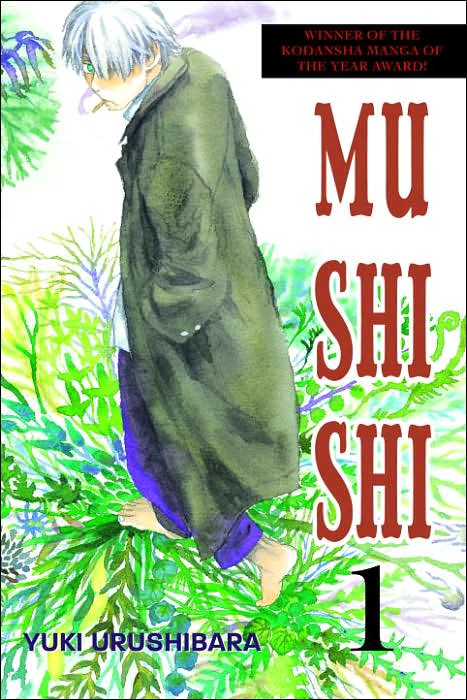
This month, I went to the local library and looked through the many series.  I ended up choosing the award-winning Mu Shi Shi: Volume 1 by Yuki Urushibara.  It looked interesting and also was one of the few first volumes available.  Most of the other series just had a random selection of volumes but I'm pretty picky about starting at the beginning of a story line.

It's hard to explain exactly what this series is about but it's a collection of the stories of Ginko, a mushishi -- someone who can interact with the mysterious creatures (mushi) in nature that are neither plant or animal.  They are sort of like spirits but have some sort of physical manifestation.  They tend to interact with humans in strange and harmful ways and Ginko is skilled in separating the mushi and healing the humans.  This volume had five different story lines in it.

I had a great time with this book and was really excited to see that there is an anime series based on it.  I've just added the discs to my Netflix queue!  There is also a live-action film from 2006 by the director of Akira, an anime classic.  I'm really curious to see the manga to live-action transformation.  When I'm in the mood, I think I will also pick up more of the six remaining volumes of Mu Shi Shi.

Slowly becoming a manga convert,
K


Support our site and buy Mushishi 1 on Amazon or find it at your local library.  We borrowed a copy from the library.

Friday, May 14, 2010

Japanese Literature Read-Along: The Wind-Up Bird Chronicle: Book 3

I've finally reached the end of my three-month journey in The Wind-Up Bird Chronicle.  Thank you to Tanabata for choosing this for the Japanese Literature Read-Along.  It was my first experience with Haruki Murakami and I enjoyed it for the most part and would love to continue exploring his work.  Again, here are my thoughts on Book 1 and Book 2.

The final section of this book leaves behind some characters, the sisters Kano, and introduces two new ones -- Nutmeg and Cinnamon Akasaka, a mother and son.  Toru Okada is still the focus of the story but we also read many other narratives that are seemingly unrelated to the present.  Some things are tied up in this third book but many are not.

I ended this book with a strange feeling -- neutrality.  I'm not sure if I liked or disliked this book overall.  There were certainly parts I enjoyed and others that made me uncomfortable.  I will have to let the impressions settle for a while longer.  This one might even require a re-read for me to be able to decide.  It was a unique experience and, if this is what it is like to read Murakami, I can see the appeal.  He is no ordinary author.

Silencing the wind-up bird,
K


Support our site and buy The Wind-Up Bird Chronicle on Amazon or find it at your local library. We received our copy from a fellow blogger.

Thursday, April 15, 2010

Japanese Literature Read-Along: The Wind-Up Bird Chronicle: Book 2


This month, the Japanese Literature Read-Along group, led by Tanabata, read Book Two of Haruki Murakami's The Wind-Up Bird Chronicle.  You can read my thoughts on Book One here.  I have a notoriously bad memory for books so I was surprised to find this one very easy to pick back up this month.

Book Two definitely feels like the middle of a book.  We rejoin Toru Okada, the unemployed main character of the story, as he encounters various mysterious characters and family members.  I don't believe there were any new characters introduced in this section of the book.  There was very little resolved and even more plot lines opened up.  I still felt that everything seemed purposeful but the book started to veer more into the realm of the supernatural and it was a bit strange.

I can't wait to finish this novel next month.  I have no idea where it is going but I'm hoping for the best for Okada.  He's a unique character.

I will be discussing this more today at In Spring It Is The Dawn.

Missing the sound of the wind-up bird,
K


Support our site and buy The Wind-Up Bird Chronicle on Amazon or find it at your local library. We received our copy from a fellow blogger.

Monday, March 15, 2010

Japanese Literature Read-Along: The Wind-Up Bird Chronicle: Book 1

I'm very excited to have the chance to join Tanabata in a three-month long read-along of The Wind-Up Bird Chronicle by Haruki Murakami.  Simon suggested I try Kafka on the Shore first but I ran out of time so this ended up being my first Murakami novel.  I've been interested in it since last year when my husband ran a Facebook application that gathered data from his friends and said that the most frequently listed "favorite" book in his friends group was this one!  Anyway, the group read started with Book One for this month and I finished it just in time.

Told in the first person, we follow Toru Okada, a married man in a Tokyo suburb who has quit his job and is trying to figure out what he wants to do next with his life.  He certainly doesn't want to return to his career in law but he's not sure what else lies in his future.  While he's spending his time at home, his wife gone at work, many things happen to him that are out of the ordinary. He receives strange phone calls from an overly familiarly woman.  His cat goes missing and his wife brings in a psychic to help them find it.  He meets a sixteen-year old neighbor girl who ditches school and does surveys around the city of bald men for a wig-making company.  And this is just the start of many irregular things that happen.  He tries to make sense of all of this but his calm personality also allows things to happen around him and, instead of acting out, he tries to find the reason that these things are coming to him.

I'm really enjoying this book so far.  There are some parts that are a bit over the top but I get the sense that Murakami doesn't write without purpose.  I think that many things will be explained and tied together before the end of the story.  As a main character, Toru Okada is very neutral--he doesn't really initiate anything--and yet he is somehow also quite likable.  Apparently the reader isn't the only one to think this.  Many of his fellow characters find him easy to confide in and seem to trust him immediately.  I am very interested to find out what happens in the rest of the story and it will be hard to wait to find out!

I will be discussing this more today at In Spring It Is The Dawn.

Hoping for a satisfying continuation,
K


Support our site and buy The Wind-Up Bird Chronicle on Amazon or find it at your local library. We received our copy from a fellow blogger.

Friday, February 26, 2010

Hello Japan! Challenge: On the Big Screen


For this month's Hello Japan! Challenge (hosted by Tanabata at In Spring it is the Dawn), we have been tasked with watching Japanese film.  Though I could have tried something completely new (and I definitely plan to in the future), it's a stressful month for me so I decided to just revisit many of my favorite films from Studio Ghibli and to finally watch the one that I haven't gotten to yet.

Founded by Hayao Miyazaki and Isao Takahata in 1985, Studio Ghibli is one of the most famous feature-length Japanese animation studios.  Primarily with the backing of Disney/Pixar and John Lasseter, all but two of Studio Ghibli's films have been translated and released in the U.S. -- including everything by Hayao Miyazaki, a true master.  The U.S. releases almost all have celebrity voices but have been kept as true to the originals as possible.  Many of our DVDs can also be watched in the original Japanese.

Of the thirteen currently available films, we own eight of them and plan to buy Ponyo as soon as it is released next month.  The only film that I haven't watched at least once yet is Grave of the Fireflies.  So here is the list of Studio Ghibli films and the date that I watched (or re-watched) each film.  I watched them all in chronological order for the first time ever.

9 February - Castle in the Sky (1986 - directed by Hayao Miyazaki)
A young girl, Sheeta, escapes from government captors only to be pursued by pirates.  With the help of a young boy, Pazu, and an eventual alliance with the warm-hearted pirates, she discovers her unusual and unique heritage and returns to her ancestral home of Laputa, the castle in the sky.  There she must protect the world from the unscrupulous plotting of the mysterious Musca -- who plans to use Laputa's tremendous power for his own gain.  This is one Z and I watch regularly.  Some kids might find parts of it boring but there are some fun chase scenes and some awesome robots.

11 February - My Neighbor Totoro (1988 - directed by Hayao Miyazaki)
After moving to be closer to the hospital that their mother is staying in, Satsuki and Mei explore their new country home and the massive and magical camphor tree nearby.  One day, Mei happens upon Totoro -- the giant spirit of the forest.  Because of their respect and innocence, Totoro helps them more than once to navigate the difficult times they are going through.  If DVDs could wear out, we would probably need a new copy of this one.  Again, some children may find it boring if they are only used to American animation.  Z has been watching it since he was a baby so he loves it.

13 February - Grave of the Fireflies (1988 - directed by Isao Takahata)
A bleak and heartbreaking tale set near the end of World War II in Japan.  Seita and Setsuko have lost their mother in an air raid, their father is in the Navy and their only known relative treats them badly.  This forces these youngsters to try and fend for themselves as best as they can.  The film is based on an autobiography.  This was the first time I watched this one.  It is definitely not for children or sensitive adults as the subject matter and what happens to the children is very grim.

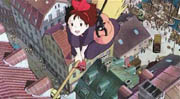
14 February - Kiki's Delivery Service (1989 - directed by Hayao Miyazaki)
Kiki, a thirteen year old witch, has reached the age where she must set out and find her own path.  She settles in the seaside city of Koriko and quickly finds herself with a temporary home and a delivery service.  It is then up to her to find her destiny.  The film is based on a novel by Eiko Kadono.  This is a favorite of ours.  It's a perfect family film but, again, might seem slow to some children.

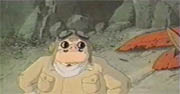
15 February - Porco Rosso (1992 - directed by Hayao Miyazaki)
An Italian fighter pilot turned bounty hunter is also a man turned pig.  Somehow cursed (it's not really explained), Marco has become known as Porco Rosso, the Crimson Pig.  He fights pirates for a living until things turn personal and an American pilot damages his plane.  Marco must get his plane rebuilt and also his sense of self.  He is helped by a sixteen year old mechanical genius who also happens to be a girl.  I like this one but the rest of the family isn't overly fond of it.  It has a bit of fist fighting and airplane fights.

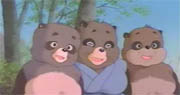
16 February - Pom Poko (1994 - directed by Isao Takahata)
This story of raccoons fighting against the destruction of their forest is set in the real-life Tama Hills outside of Tokyo.  The clearing of land for the development project of New Tama has already driven the foxes out and the raccoons must use their traditional powers of transformation to try and scare away the humans.  This was my second time watching this one.  It might not be appropriate for younger children even though the American version has been a bit sanitized.

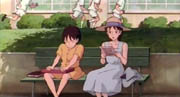
18 February - Whisper of the Heart -- (1995 - directed by Yoshifumi Kondo -- screenplay and storyboards by Hayao Miyazaki)
A chance encounter with a mysterious cat on a train begins this simple story of a young teen, Shizuku, who is starting to think about what she wants to do with her life besides read and daydream.  She is also finding love for the first time and all of the emotions that come with it.  This is appropriate for all ages but kids will probably be bored by it.

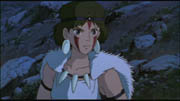
20 February - Princess Mononoke (1997 - directed by Hayao Miyazaki)
A teenage prince saves his village from attack by a demon.  He is injured in the attack and must leave his village forever to find out what enraged the boar so much that he turned into a demon.  Ashitaka soon arrives in Iron Town and finds that they are cutting down the forest to get to the minerals in the ground.  They also plan on killing the forest spirit so Ashitaka joins Princess Mononoke, a human adopted by wolves, to save the forest and to find a way for the humans and forest to co-exist.  This is not a family film as it is heavy on the violence and blood and becomes quite scary at times.

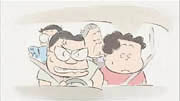
22 February - My Neighbors the Yamadas (1999 - directed by Isao Takahata)
This slice-of-life film follows the Yamadas through random events in their lives with short vignettes.  The simple animation leaves the focus on this modern Japanese family and their ups and downs.  Between the antics of an ornery grandmother, a scatterbrained mother, a traditional father and a teen boy and young girl, we see many facets of everyday Japanese city life.  There isn't anything really objectionable in the film but it will probably bore most children.  This was the first time I watched the entire film through.

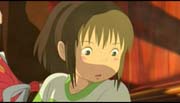
23 February - Spirited Away (2001 - directed by Hayao Miyazaki)
A ten year old girl, Chihiro, and her parents get sidetracked on their way to their new home and find a mysterious place where the parents are turned into pigs.  Chihiro must work to free them and to regain her name at a magical place -- a bathhouse for spirits. She is helped by Haku, a dragon who is being held against his will because he has lost his true identity.  This has a bit of blood and some intense situations and so is probably best for older children.  Z watches it and likes it but we talk about some of the things that happen so that they aren't scary.

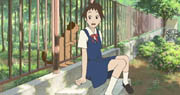
23 February - The Cat Returns (2002 - directed by Hiroyuki Morita)
A sequel of sorts to Whisper of the Heart, this story features Haru, a girl who saves a cat from being hit by a truck.  The cat turns out to be Prince of the Cats and their grand reward for her is to transform her into a cat and have her marry the Prince.  Though Haru has a rough life as a human, she doesn't want to be a cat and so she asks for help at The Cat Bureau from The Baron, a unique jewel-eyed cat character, and his friend Muta -- the cat that Shizuku follows on the train in Whisper of the Heart.  This is an innocent and fun film -- great for all ages -- and should have enough action to entertain most kids.

24 February - Howl's Moving Castle (2004 - directed by Hayao Miyazaki)
Sophie, a quiet young hat maker, is saved one day from lecherous soldiers by a mysterious man.  Unfortunately, it's the infamous Wizard Howl and the Witch of the Waste, his worst enemy and also his greatest admirer, is jealous.  So that night, the witch goes to Sophie's business and puts a curse on her and she ages prematurely and becomes an old woman.  Because she can't be seen by her family, she leaves and ends up hitching a ride on the moving castle of none other than Howl himself.  She becomes the self-appointed cleaning lady and learns many things about this mysterious man and the world of magic.  This movie has some intense scenes but is fun for most children.  It might be my favorite and if you haven't read the novel by Diana Wynne Jones on which it is loosely based, you're missing out!

The final U.S. released film is Ponyo (2008 - directed by Hayao Miyazaki) and we have it on pre-order.  It will be released on DVD on 2 March.  We watched it in the theatre and can't wait to see it again.

Whew!  This turned out to be a much bigger task than I thought it would be!  Most animated films are around ninety minutes but Studio Ghibli films tend toward two hours long.  Since I've probably spent over twenty hours watching these films this month, I'm going to just give you a few bullet points on what to expect from these films.

  • They are almost all about children but they are not necessarily for children.
  • All of these films use traditional, hand-drawn animation.  Though the quality improves somewhat through the years, it is relatively consistent.  You will definitely recognize a Miyazaki film.
  • Main characters and "good guys" tend to be drawn more realistically with villains and, strangely, the elderly being drawn in more exaggerated ways.
  • Few of the films focus on romantic love.  Much more common are innocent "first loves", very strong friendships and familial love.
  • Other common themes are nature and the environment, magic, flight, animals and education.
  • Almost all of the films feature strong female characters -- whatever their ages.
  • Most of all, these films all give a view of the world that is different than the American one.  Eight of the films give various views of Japanese life.

Though time-consuming, this has been a wonderful project and I really appreciate Studio Ghibli more now that I have watched all of these films together.  I don't love them all and, in fact, there are some that I probably won't ever watch again, but they all have value for one reason or another.  And it was a different experience to watch some of our favorites and really focus on the fact that they are Japanese films.  A big thank you to Tanabata for this experience!

And a few notes ....
Screenshots and links in this post are courtesy of the fabulous Ghibli-centric site, Online Ghibli.  They have comprehensive information on every film and would be a great resource if you want to choose a film to try out.  There's also a brand new Ghibli blog by GalleryNucleus that features fan art and news.  And, finally, if you are in Japan, don't miss the Ghibli Museum!

Expanding our world view through international film,
K and Z

Wednesday, January 27, 2010

Hello Japan! Challenge: Music To My Ears

For this month's Hello Japan! challenge, Tanabata asked us to listen to any type of Japanese music.  I was hoping to be able to attend a local Taiko performance but the two Seattle groups had schedules that were not compatible with ours.  Z and I saw a performance by One World Taiko this last summer and loved it.  We were outside on a warm day and had dragonflies zooming overhead.  It was the perfect setting for the performance.  But since we weren't able to listen to this traditional Japanese drum music, we decided to go the opposite way with this post!

I don't think there is any music category more diverse than anime theme songs.  Many are pop songs but there are also hard rock/metal songs, soaring ballads and more typical rock songs.  Since there are types of anime for all ages and all viewers, I thought I would share the theme songs from some of our family favorites today.

One show that I enjoyed a few years back (and have been thinking about revisiting soon) is Blue Seed.  It's about a high school girl who fights a supernatural plant monster with the help of a mysterious warrior while running from government agents.  The theme song is called Carnival Babel and is performed by Takada Band.  It's definitely a pop song.


The lyrics are very interesting in this one because the first phrase is in English but the rest of the song is in Japanese.  Here are the first four lines and I dare you to make sense of them!
Mysterious Tokyo
Take it easy dangerous night
Mysterious Tokyo
Pick me up foxy night game
The rest of the lyrics relate somewhat to the story and are rather beautiful.  Here is an excerpt --
The moonbeams freeze over, inviting us to another night
The horns are exposed to the beat of the cold city.

A labyrinth has got a silence more tedious than loneliness
Leaving my body for pleasure, this night is gonna shine in a sea of illumination.

The blue, blue moment has begun to melt
My future rises up fleetingly now
Life glitters as much as light, and then it burns off.
One of T's favorite animes is Big O.  This show might have the best lead man ever in Roger Smith.  And the style of this song is much different. It's half in English, half in Japanese and makes ample use of the show title.  It also borrows significantly from the Flash Gordon theme song by Queen.  It's written and performed by Nagai Rui ---whose favorite band happens to be listed as, you guessed it, Queen.


The final one I'll share with you today is Z's favorite anime song and it's the theme song to My Neighbor Totoro, an amazing and adorable film by Hayao Miyazaki.  I'll admit that it's one of my favorite films of all time.  When Z was a baby and would have a particularly bad night, this movie (with the Japanese dialogue) almost always calmed him down.  First here is the English version of Stroll, performed by Azumi Inoue --


And here it is in the original Japanese (with English subtitles).  As you can see, the lyrics were changed quite a bit for the English version to fit the rhythm of the song but both versions are happy and light.


Are there any anime theme songs that you particularly enjoy or is this something completely new to you?

Wondering how long these will be stuck in our heads now,
K and Z

Monday, January 25, 2010

"We called him the Professor."


You're probably about to see a number of reviews around for Yoko Ogawa's short novel The Housekeeper and the Professor.  It was this month's selection for the Japanese Lit Group and it's a wonderful book.

A story of everyday life featuring not so ordinary characters, this book is told from the point of view of the "housekeeper" -- a nameless woman whose difficult upbringing and young pregnancy has given her very little advantage in life.  She receives a new assignment one day to work for the "Professor".  He lives in a cottage adjacent to the home of his sister-in-law and has a unique brain injury from a car accident years before -- his short-term memory only lasts for eighty minutes.  He wears a suit covered in small notes that remind him of the little things in life.  He is a difficult assignment in some ways but easy in others, in that he spends most of his time working on mathematical problems that he finds in a magazine.  The housekeeper is fascinated with him and with the way he introduces her to the world of numbers and mathematics.  When he insists that her ten year old son also come to the house after school, a unique relationship is formed between the three people.  And yet, the question remains if they have a true friendship or not due to his limitations.

I am finding it hard to choose the right words for this discussion.  It is a touching story that is unique in its exploration of friendship, motherhood and a life that is anything but ordinary.  I was surprised by how deep this book went in such a short time.  I really felt like I knew these people and understood their trials and lives.  This is also a new view of modern Japanese life for me -- complete with small details like meals and weather.  I enjoyed these aspects of the book just as much as the characters.  Finally, as I try to remember to do in any stellar translated work that I read, I also want to give credit to Stephen Snyder, the translator for this novel.  This book is very accessible to all readers.

Living a life segment of my own,
K


Support our site and buy The Housekeeper and the Professor on Amazon or find it at your local library. We bought our own copy.

Monday, November 30, 2009

Japanese Book Group: The Old Capital

Tanabata of In Spring it is the Dawn has started a Japanese Literature Book Group. As I have never read any Japanese literature, I thought this was a great way to start without the pressure of having to choose my own books. A new book will be chosen every two months and the inaugural choice was The Old Capital by Nobel Prize winning author Yasunari Kawabata.

This short book (160 pages) is actually two stories in one -- the coming of age of Chieko, a girl who follows the traditions of the past, and the inevitable aging of the ancient city of Kyoto, Japan's one-time capital. As Chieko contemplates her future and that of her own aging parents, she is confronted with information about her past that may change everything for her. We follow Chieko and her father as they explore the traditional sites of Kyoto and participate in some of the many festivals and rituals still performed even in the early 1960s.

There was so much to learn in my first literary introduction to Japan. The first thing I noticed was that Japanese does not necessarily translate smoothly to English. Many of the strange phrasings and cadences that you hear in translated Japanese animated films were also present in this book. So in a way it was familiar but only in an obviously inaccurate manner. Secondly, the pacing and movement of time in the book was much different than in Western literature. The foreword in my edition said that this story was originally published in the daily newspaper in 100 installments. I would have been really interested to see where the breaks were between installments. I think it might have brought more sense to the pacing of the book. Finally, this book gave me a definite interest in finding out more about Kyoto -- both its past and the current state of the city. It was definitely one of the most interesting characters in the story -- especially since I had problems connecting with Chieko.

The next book group selection is one that was already on my TBR list-- The Housekeeper and the Professor by Yoko Ogawa --so I will definitely be participating again.

Embarking on a literary journey,
K


Support our site and buy The Old Capital on Amazon or find it at your local library. We borrowed our copy from the library.

Sunday, November 22, 2009

Hello Japan! Food Challenge

This month's Hello Japan! task (to my great delight!) was to eat some Japanese food. Although I would have loved to try making some yakisoba again (I've only made it once before), I decided instead to go to my favorite local Japanese restaurant, Kikuya. It had been a couple of months since I was last there and I had some definite cravings. The husband (T), Z and I went on a weekday afternoon to avoid the long wait that this place usually has at dinner time. Without further ado, here's my photo post about our visit this past week.


I can't find a meaning for "Kikuya". I think it might be a name.


This is a small and tastefully decorated restaurant in a strip mall. All of the employees are Japanese. The man in the picture is the sushi chef.


We started as usual with some hot green tea -- except for Z who had lemonade. We also had miso soup and cucumber salad.


T got his standard order -- "sushi plate".


Z got his favorite -- gyoza.


And I enjoyed my favorite Japanese food -- tempura. This restaurant serves prawns, carrots, broccoli, green onion, sweet onion, zucchini, green bean and sweet potato tempura.


We had a great meal. I can't wait to go back! We have one more Japanese food outing planned this month -- a trip to Benihana this week with family. Though the teppanyaki method is authentic, the onion volcano is not.

Loving our Japanese excursion,
K and Z