Showing posts with label natural history. Show all posts

Wednesday, August 29, 2018

Me and HDT


At the beginning of the summer, I made some reading plans that included spending quality time with Henry David Thoreau. Well, it took me almost all of August but I finished! 500 pages of biography and 300 pages of rambles and rambling later and I am safely on the other side. My verdict: I'm on the fence about Thoreau the writer but Thoreau the man was well worth meeting.

I started with Henry David Thoreau: A Life by Laura Dassow Walls and read through his childhood and young adult years, up until his sojourn into the wilderness ... one mile away from his parents' house.


I then spent a ridiculously long time reading Walden. I couldn't get through more than a few pages a day because his writing and thoughts were so dense. It certainly wasn't as tedious as I remembered from high school though. It was just grounded in a strong knowledge of the classics and world religions and those were things that I hadn't been exposed to at the time. But many of his thoughts were simply truisms, like this bit from the chapter called Reading --
It is not all books that are as dull as their readers. There are probably words addressed to our condition exactly, which, if we could really hear and understand, would be more salutary than the morning or the spring to our lives, and possibly put a new aspect on the face of things for us. How many a man has dated a new era in his life from the reading of a book.
After Thoreau's two year, two month, and two day experiment ended, I headed back to the biography and that's when I really started enjoying myself. Thoreau's views on slavery, war, Native Americans, and evolution were all progressive and his actions were sometimes just as brave. When he escorted escaped slaves to trains bound for Canada or when he was the first to speak out nationally in support of John Brown after the Harper's Ferry uprising, he showed his true character. And when his first thoughts after reading Darwin's Origin of the Species were that all men truly were created equal and that the ranking of the races had no actual basis in nature (as was claimed by pro-slavery jerks), I couldn't help but become one of Thoreau's biggest fans. His thoughts on conservation and natural spaces and even hunting were just the icing on the cake. I'll admit to shedding quite a few tears when he died at the age of 44 from tuberculosis. He could have done so much more with the other half a lifetime that he was denied.

I am very happy that I decided to take on this project this summer and I will read more of Thoreau's writings, especially Civil Disobedience, in the future. And I can cross another book off my high school dislike list too! Dare I try a reread of The Grapes of Wrath next?! Haha.

With inspiration,
K

Thursday, February 1, 2018

The Natural World, Past and Present

Last weekend I participated in about half of the 24 in 48 Readathon. (The second day I just couldn't get interested in reading for some reason so I only got 11 hours done.) The first two books I read were ones sitting on my non-fiction TBR that I wanted to be able to mark as read.


The first is one I just got this past Christmas -- Amazing Rare Things: The Art of Natural History in the Age of Discovery by David Attenborough, Susan Owens, Martin Clayton, and Rea Alexandratos. It focuses on five natural history artists--Leonardo da Vinci, Cassiano dal Pozzo, Alexander Marshal, Maria Sybilla Merian, and Mark Catesby--and their works that are now held in the Royal Collection. They each represent a period in time, from about 1470-1730.

I am intrigued by natural history artists and actually have five prints hanging over my tv (that are rotated in from a collection I have -- right now they are a squid, a crab, a pineapple, an octopus, and molluscs). It was interesting to read about the diverse backgrounds of each of these artists and about what inspired them to draw. This isn't a super comprehensive natural history art book but more a snapshot of the works of a few prolific pioneers.


Then I read Jane Goodall's 50 Years at Gombe, which has been on my shelves for a few years now (the 50 years was in 2010). If you are a Goodall fan, most of the information and history in the book will be a review but it's a nice collection of some of the National Geographic photographs that brought Jane to the world's attention and some more recent photos of the land and the current chimps. (I happen to own the original August 1963 Nat Geo that first featured the chimpanzees.) This book is great for a basic overview and a call to action. It lists many of the organizations that are supported by the Jane Goodall Institute and the ways for people all around the world to make a difference in the lives of the chimpanzees and the humans around them. I was extremely happy to hear that my best friend donated to the Institute this year instead of sending me Christmas presents. (I donated to the Reteti Elephant Sanctuary instead of shopping for her.)

Have you read any great nature/natural history books lately?

Returning to the roots,
K

Friday, May 12, 2017

New Releases: The Zoo and The Book That Changed America

Sometimes the reading of one good book leads directly to another. The first of these I bought for my own Easter basket, the second was a library book that had almost reached its due date.


The Zoo: The Wild and Wonderful Tale of the Founding of London Zoo: 1826-1851 by Isobel Charman is just what it says in the subtitle, the story of the founding of the Zoological Society of London and, in turn, the first days of the London Zoo. I'm not sure I've mentioned this much here but my bachelor's degree is in zoology and I did two projects with many hours of observation on captive animals (sea otters!) before getting my degree. Zoos and aquariums are near and dear to my heart (and absolutely necessary if they have a conservation mission) as is Victorian London so this book couldn't have been more up my alley. It was definitely a tough read at times because of the lack of knowledge of how to properly house and care for wild animals and also their incompatibility with London's filthy air and chilly climate. This was balanced, though, by the work of some good men who truly cared and wanted to learn about the creatures they were charged with looking after.

Each chapter is written to focus on a specific man and to highlight his contribution to the zoo, be he a visionary, an architect, or an Earl. What led me to crave my next read was the chapter on Darwin, whose voyage on The Beagle and return with samples and ideas coincided with some of the first years of the zoo.

(Note: this is narrative non-fiction but Charman was very careful in using original sources to create the narrative. She added 12 pages of Notes on the Use of Sources at the end so I trust that she didn't take many liberties. Still, I know some readers aren't fans of narrative non-fic, hence this warning.)


I don't remember where I heard about Randall Fuller's The Book That Changed America: How Darwin's Theory of Evolution Ignited a Nation but I know that I immediately put a hold on it at my local library and then it sat here for weeks unread, renewed twice. Luckily, the mood struck to read it before it was due back (finished yesterday, due today) because it was incredibly relevant and educational. I expected to fall more in love with Darwin and his scholarship but I actually ended up with a newfound love and respect for Henry David Thoreau, nemesis of my high school days due to a badly-timed read of Walden. The book focuses on the literary and scientific men and women of Concord, Massachusetts and surrounding environs, their religion, Transcendentalism, and their abolitionist views in the days after Darwin's Origin of the Species arrived in the United States. Reading about Emerson, Thoreau, Alcott (father and daughter), and others as they absorbed the theory of Natural Selection and applied it to their fight for the end of slavery was fascinating. There was also a plethora of content about natural history, literature, and lifelong friendships, enough to make this a must-read book. I plan to buy my own copy of this book so that I can fill it with sticky notes. This passage felt especially relevant today--
That night [Thoreau] wrote nothing about the world beyond Concord's woods--a world that seemed increasingly on the edge of combustion, too. A few months earlier he had been utterly consumed by the John Brown affair, unable to sleep, angry, and aflame with indignation. During the winter he had willed himself to quit thinking about the nation's baleful state of affairs, its compromises and hypocrisies, its unacceptable complicity with slavery. With little faith in the political process, which he believed favored the wealthy and self-interested, Thoreau read about the upcoming Republican and Democratic conventions with derision.
Darwin's book had helped him take his mind off these things. The Origin had redirected his thinking. It shifted his focus from a corrupt society that seemed incapable of reform to a natural world defined entirely by change and exuberant dynamism. In his journals and conversations, Thoreau still sometimes erupted in anger at Brown's unjust execution. But Darwin's theory soothed him during this period.
While reading this, I felt relieved that my feelings of late were not irrational but heartbroken that our country has yet to become the "more perfect union" that the founders envisioned. It also reminded me that regular distractions from politics are essential for good health and that a simple one can be found in any good book.

Evolving daily,
K

Sunday, September 29, 2013

Picture Books To Teach 1000 and More Lessons

Sometimes I wish that I was homeschooling Z because there are so many fantastic non-fiction picture books out there that I could use in a variety of subjects.

There are books about science like


Electrical Wizard: How Nikola Tesla Lit Up the World, written by Elizabeth Rusch, illustrated by Oliver Dominguez, might not fully represent the handsomeness of this scientist but it does portray the hard work and genius of the man. It starts with Tesla's childhood in Serbia (including the name of his cat), moves through his college years and finishes with his professional life. It also has six pages of history and science at the end and a great bibliography.

There are books about math like


Mesmerizing Math by Jonathan Litton and Thomas Flintham is a totally amazing flap-and-tab book that gives a quick introduction to dozens of math concepts, from geometry to tessellation. Z was fascinated by this book and all of its hidden information. I like that it makes math fun and accessible. This book obviously won't teach kids everything they need to know about the diverse ideas (it's only 16 pages long), but it will give kids a familiarity with concepts and terms that should help later when they reach these concepts in their studies.

There are books about animals like


and


The Organic Bug Book by Chris Korrow (farmer) attempts to get kids to look past the ick factor that they may have learned from squeamish parents to the true usefulness and fascinating qualities of a variety of insects. Not all bugs are welcomed by farmers but many are grouped together unfairly with the true pests. This book tries to clear up some of the misconceptions and to celebrate the diversity of insects.

Marije Tolman (artist) and Jesse Goossens' (writer) Jumping Penguins is a beautiful tribute to the many amazing qualities of animals that one might see at a zoo. The artwork is not realistic (bats have bandages, polar bears are painting and there's a blue whale on a scale) but the book is oh so fun and the facts might be ones that you haven't heard before -- bison can jump six feet vertically, polar bears are left-handed and caterpillars throw their poop away from their bodies to confuse wasps that would want to eat them.  This would be a fantastic gift book as well because it's just so attractive!

And there are books about places like


This beautiful duo from Charlotte Dematons, Holland and A Thousand Things About Holland (with text by Jesse Goossens), give a wonderful introduction to a beautiful country. One is a book without words, simply presenting Holland from the water through the busy cities and on to the countryside. It has many details that should give young readers an idea of the things that make Holland unique. The other is, well, a book of a thousand pieces of information and literature about Holland's history, weather, cities, people, art and more told from the unique perspective of Dematons, who was born in France but studied art in Amsterdam. Obviously, with 1000 "things", there's a lot to learn about Holland, especially for kids with little previous exposure to the country.

Luckily, there are no limits on where one can learn, so we can bring all of these books into our home anyway (and you might want some of them in your home too).

Learning the fun and colorful way,
K and Z

Wednesday, December 5, 2012

A Week of Gift Ideas: For Collectors and Nature Enthusiasts

Today's offering is one that I requested from Sterling without quite realizing what it would be. When it arrived, I was floored by what a gorgeous product it is.


This is actually the front of a hardcover case that contains both a book of essays and dozens of printed plates. Natural Histories: Extraordinary Rare Book Selections from the American Museum of Natural History Library has something special for students of natural history, history and art.

From the publisher --
For the first time, Natural Histories allows readers a privileged glimpse of seldom-seen, fully illustrated scientific tomes from the American Museum of Natural History's Rare Book Collection. Forty essays from the museum's top experts in a variety of natural science disciplines, from anthropology to zoology, accompany and discuss each rare work's unique qualities and scientific contribution. Packaged with 40 extraordinary prints suitable for framing and facsimile items inside bound-in envelopes, this deluxe edition will fascinate both natural science and art lovers alike.
If you have someone in your life that you think would appreciate this sort of thing, this would be a unique and thoughtful gift. As for me, I will be shopping for frames soon as I plan to choose my favorite prints for a wall collage. I might even include one or two of my own drawings (which I would share with you if I could find them but alas, I seem to have "put them away" somewhere).

Celebrating the art of science,
K

Monday, April 30, 2012

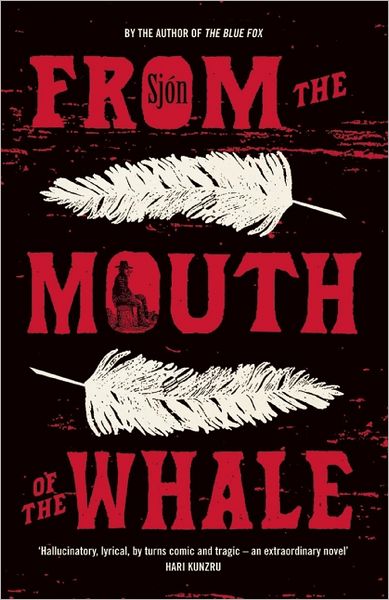
New-ish Release: From the Mouth of the Whale


Ever since hearing about The Blue Fox, I've wanted to read something by Sjón (a.k.a. Sigurjón Birgir Sigurðsson). There's just something unique about Icelandic literature and From the Mouth of the Whale is a perfect example of it. Set in 1635, it is the story of Jónas Pálmason, also known as Jónas the Learned, whose education also ended up being his downfall when he angered a local magistrate. This book contrasts the structure and order of natural history with the unpredictability of man.

Different from other Icelandic books I've read, there's almost no reference to the gods of old but, instead, this novel touches on one of the more recent religious conflicts of the island nation -- the change from Catholicism to Lutheranism in the mid sixteenth century. Though there are some horrific events in this ever-shifting story, overall it's a magical book.

Treasuring hearth and home,
K